

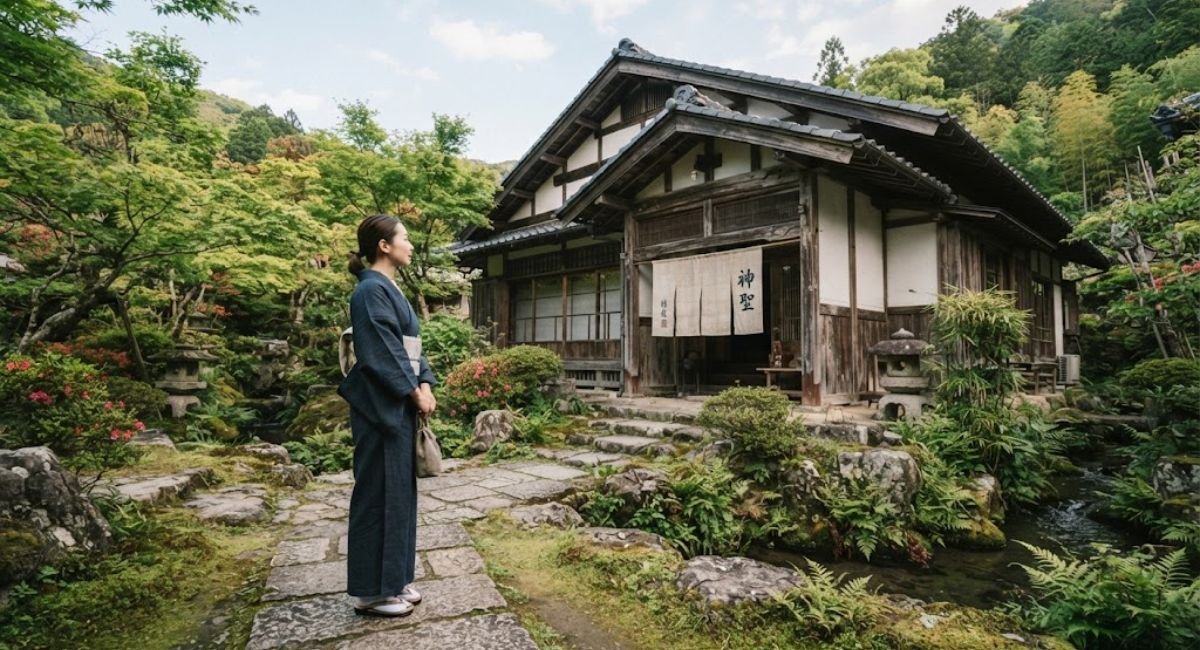
Naming a home is a quiet art in Japan, rooted in a tradition called yagō that gave ordinary families an identity long before most people had surnames. This collection of 400+ Japanese House Names brings that custom to life using real house-naming suffixes like 邸 (tei), 庵 (an), and 館 (kan), paired with nature words drawn from everyday Japanese vocabulary, not invented for effect.
Whether you’re naming a grand mansion residence, a quiet garden cottage, a countryside retreat, or a guesthouse with real character, this guide offers unique combinations, English translations, and historic yagō-style picks, each paired with clear pronunciation guides. You’ll find a name that genuinely reflects the home it belongs to.
Why Choose A Unique Japanese House Name?
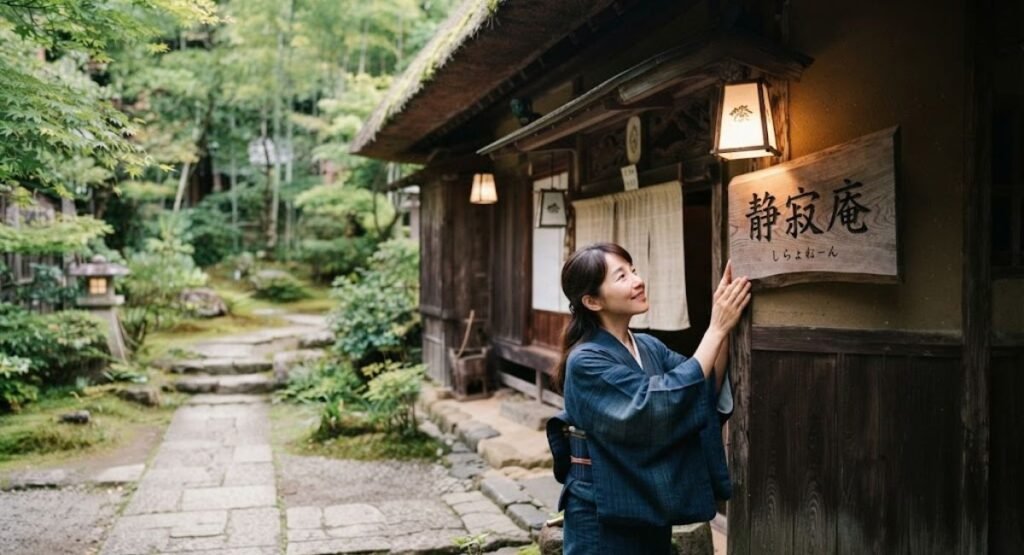
A house name does something a street address never can: it gives a home a personality. Japanese House Names draw on real naming suffixes still used across Japan today, 邸 (tei, a formal residence), 庵 (an, a quiet hermitage), 荘 (sou, a villa), 館 (kan, a grand hall), and 屋 (ya, the root of yagō itself), paired with a word that captures what the house means to the people inside it.
Unique Japanese House Names
These Japanese House Names pair nature and season words with six different house-type suffixes, giving each one a distinct personality depending on the ending you choose.
See also 400+ Best Japanese Names That Mean Shadow: Ninja & Dusk Picks
- Sakura-Tei (sah-koo-rah-teh-ee) 🏡 Real-style name Cherry blossom’s t, a genuinely common real restaurant and guesthouse name across Japan (桜邸)
- Sakura-An (sah-koo-rah-ahn) 🏡 Cherry blossom’s a small (桜庵)
- Sakura-Sou (sah-koo-rah-soh) 🏡 Real-style name Cherry blossom’s s, a classic real apartment-building name style (桜荘)
- Sakura-Kan (sah-koo-rah-kahn) 🏡 Cherry blossom’s a grand (桜館)
- Sakura-Ya (sah-koo-rah-yah) 🏡 Cherry blossom’s the root of yagō (桜屋)
- Sakura-Kyo (sah-koo-rah-kyoh) 🏡 Cherry blossom’s a quiet (桜居)
- Tsuki-Tei (tsoo-kee-teh-ee) 🏡 Moon’s the formal real-world suffix used for notable homes (月邸)
- Tsuki-An (tsoo-kee-ahn) 🏡 Real-style name Moon’s a, a real, widely used name for tea houses and ryokan (月庵)
- Tsuki-Sou (tsoo-kee-soh) 🏡 Moon’s a common real suffix for Japanese apartment buildings and boarding houses (月荘)
- Tsuki-Kan (tsoo-kee-kahn) 🏡 Moon’s a grand (月館)
- Tsuki-Ya (tsoo-kee-yah) 🏡 Moon’s the root of yagō (月屋)
- Tsuki-Kyo (tsoo-kee-kyoh) 🏡 Moon’s a quiet (月居)
- Yuki-Tei (yoo-kee-teh-ee) 🏡 Snow’s the formal real-world suffix used for notable homes (雪邸)
- Yuki-An (yoo-kee-ahn) 🏡 Snow’s a small (雪庵)
- Yuki-Sou (yoo-kee-soh) 🏡 Snow’s a common real suffix for Japanese apartment buildings and boarding houses (雪荘)
- Yuki-Kan (yoo-kee-kahn) 🏡 Snow’s a grand (雪館)
- Yuki-Ya (yoo-kee-yah) 🏡 Snow’s the root of yagō (雪屋)
- Yuki-Kyo (yoo-kee-kyoh) 🏡 Snow’s a quiet (雪居)
- Kaze-Tei (kah-zeh-teh-ee) 🏡 Wind’s the formal real-world suffix used for notable homes (風邸)
- Kaze-An (kah-zeh-ahn) 🏡 Wind’s a small (風庵)
- Kaze-Sou (kah-zeh-soh) 🏡 Wind’s a common real suffix for Japanese apartment buildings and boarding houses (風荘)
- Kaze-Kan (kah-zeh-kahn) 🏡 Wind’s a grand (風館)
- Kaze-Ya (kah-zeh-yah) 🏡 Wind’s the root of yagō (風屋)
- Kaze-Kyo (kah-zeh-kyoh) 🏡 Wind’s a quiet (風居)
- Mori-Tei (moh-ree-teh-ee) 🏡 Forest’s the formal real-world suffix used for notable homes (森邸)
- Mori-An (moh-ree-ahn) 🏡 Forest’s a small (森庵)
- Mori-Sou (moh-ree-soh) 🏡 Forest’s a common real suffix for Japanese apartment buildings and boarding houses (森荘)
- Mori-Kan (moh-ree-kahn) 🏡 Forest’s a grand (森館)
- Mori-Ya (moh-ree-yah) 🏡 Forest’s the root of yagō (森屋)
- Mori-Kyo (moh-ree-kyoh) 🏡 Forest’s a quiet (森居)
- Izumi-Tei (ee-zoo-mee-teh-ee) 🏡 Spring water’s the formal real-world suffix used for notable homes (泉邸)
- Izumi-An (ee-zoo-mee-ahn) 🏡 Spring water’s a small (泉庵)
- Izumi-Sou (ee-zoo-mee-soh) 🏡 Spring water’s a common real suffix for Japanese apartment buildings and boarding houses (泉荘)
- Izumi-Kan (ee-zoo-mee-kahn) 🏡 Spring water’s a grand (泉館)
- Izumi-Ya (ee-zoo-mee-yah) 🏡 Spring water’s the root of yagō (泉屋)
- Izumi-Kyo (ee-zoo-mee-kyoh) 🏡 Spring water’s a quiet (泉居)
- Take-Tei (tah-keh-teh-ee) 🏡 Bamboo’s the formal real-world suffix used for notable homes (竹邸)
- Take-An (tah-keh-ahn) 🏡 Real-style name Bamboo’s a, a real, classic hermitage-style name tied to bamboo groves (竹庵)
- Take-Sou (tah-keh-soh) 🏡 Bamboo’s a common real suffix for Japanese apartment buildings and boarding houses (竹荘)
- Take-Kan (tah-keh-kahn) 🏡 Bamboo’s a grand (竹館)
- Take-Ya (tah-keh-yah) 🏡 Bamboo’s the root of yagō (竹屋)
- Take-Kyo (tah-keh-kyoh) 🏡 Bamboo’s a quiet (竹居)
- Matsu-Tei (mah-tsoo-teh-ee) 🏡 Real-style name Pine’s t, a real, classic restaurant naming style, matsutei (松邸)
- Matsu-An (mah-tsoo-ahn) 🏡 Pine’s a small (松庵)
- Matsu-Sou (mah-tsoo-soh) 🏡 Pine’s a common real suffix for Japanese apartment buildings and boarding houses (松荘)
- Matsu-Kan (mah-tsoo-kahn) 🏡 Pine’s a grand (松館)
- Matsu-Ya (mah-tsoo-yah) 🏡 Real-style name Pine’s y, a genuinely common real shop and inn name, matsuya (松屋)
- Matsu-Kyo (mah-tsoo-kyoh) 🏡 Pine’s a quiet (松居)
- Ume-Tei (oo-meh-teh-ee) 🏡 Real-style name Plum blossom’s t, a real, traditional restaurant and inn name (梅邸)
- Ume-An (oo-meh-ahn) 🏡 Plum blossom’s a small (梅庵)
- Ume-Sou (oo-meh-soh) 🏡 Plum blossom’s a common real suffix for Japanese apartment buildings and boarding houses (梅荘)
- Ume-Kan (oo-meh-kahn) 🏡 Plum blossom’s a grand (梅館)
- Ume-Ya (oo-meh-yah) 🏡 Plum blossom’s the root of yagō (梅屋)
- Ume-Kyo (oo-meh-kyoh) 🏡 Plum blossom’s a quiet (梅居)
- Kiku-Tei (kee-koo-teh-ee) 🏡 Chrysanthemum’s the formal real-world suffix used for notable homes (菊邸)
- Kiku-An (kee-koo-ahn) 🏡 Chrysanthemum’s a small (菊庵)
- Kiku-Sou (kee-koo-soh) 🏡 Real-style name Chrysanthemum’s s, a real, traditional apartment and inn name style (菊荘)
- Kiku-Kan (kee-koo-kahn) 🏡 Chrysanthemum’s a grand (菊館)
- Kiku-Ya (kee-koo-yah) 🏡 Chrysanthemum’s the root of yagō (菊屋)
- Kiku-Kyo (kee-koo-kyoh) 🏡 Chrysanthemum’s a quiet (菊居)
- Fuji-Tei (foo-jee-teh-ee) 🏡 Wisteria’s the formal real-world suffix used for notable homes (藤邸)
- Fuji-An (foo-jee-ahn) 🏡 Wisteria’s a small (藤庵)
- Fuji-Sou (foo-jee-soh) 🏡 Wisteria’s a common real suffix for Japanese apartment buildings and boarding houses (藤荘)
- Fuji-Kan (foo-jee-kahn) 🏡 Real-style name Wisteria’s k, echoes real hot-spring inn names across Japan (藤館)
- Fuji-Ya (foo-jee-yah) 🏡 Wisteria’s the root of yagō (藤屋)
- Fuji-Kyo (foo-jee-kyoh) 🏡 Wisteria’s a quiet (藤居)
- Ran-Tei (rahn-teh-ee) 🏡 Orchid’s the formal real-world suffix used for notable homes (蘭邸)
- Ran-An (rahn-ahn) 🏡 Orchid’s a small (蘭庵)
- Ran-Sou (rahn-soh) 🏡 Orchid’s a common real suffix for Japanese apartment buildings and boarding houses (蘭荘)
- Ran-Kan (rahn-kahn) 🏡 Orchid’s a grand (蘭館)
- Ran-Ya (rahn-yah) 🏡 Orchid’s the root of yagō (蘭屋)
- Ran-Kyo (rahn-kyoh) 🏡 Orchid’s a quiet (蘭居)
- Tsubaki-Tei (tsoo-bah-kee-teh-ee) 🏡 Camellia’s the formal real-world suffix used for notable homes (椿邸)
- Tsubaki-An (tsoo-bah-kee-ahn) 🏡 Camellia’s a small (椿庵)
- Tsubaki-Sou (tsoo-bah-kee-soh) 🏡 Camellia’s a common real suffix for Japanese apartment buildings and boarding houses (椿荘)
- Tsubaki-Kan (tsoo-bah-kee-kahn) 🏡 Camellia’s a grand (椿館)
- Tsubaki-Ya (tsoo-bah-kee-yah) 🏡 Camellia’s the root of yagō (椿屋)
- Tsubaki-Kyo (tsoo-bah-kee-kyoh) 🏡 Camellia’s a quiet (椿居)
- Hasu-Tei (hah-soo-teh-ee) 🏡 Lotus’s the formal real-world suffix used for notable homes (蓮邸)
- Hasu-An (hah-soo-ahn) 🏡 Lotus’s a small (蓮庵)
- Hasu-Sou (hah-soo-soh) 🏡 Lotus’s a common real suffix for Japanese apartment buildings and boarding houses (蓮荘)
- Hasu-Kan (hah-soo-kahn) 🏡 Lotus’s a grand (蓮館)
- Hasu-Ya (hah-soo-yah) 🏡 Lotus’s the root of yagō (蓮屋)
- Hasu-Kyo (hah-soo-kyoh) 🏡 Lotus’s a quiet (蓮居)
- Hoshi-Tei (hoh-shee-teh-ee) 🏡 Star’s the formal real-world suffix used for notable homes (星邸)
- Hoshi-An (hoh-shee-ahn) 🏡 Star’s a small (星庵)
- Hoshi-Sou (hoh-shee-soh) 🏡 Star’s a common real suffix for Japanese apartment buildings and boarding houses (星荘)
- Hoshi-Kan (hoh-shee-kahn) 🏡 Star’s a grand (星館)
- Hoshi-Ya (hoh-shee-yah) 🏡 Star’s the root of yagō (星屋)
- Hoshi-Kyo (hoh-shee-kyoh) 🏡 Star’s a quiet (星居)
- Sora-Tei (soh-rah-teh-ee) 🏡 Sky’s the formal real-world suffix used for notable homes (空邸)
- Sora-An (soh-rah-ahn) 🏡 Sky’s a small (空庵)
- Sora-Sou (soh-rah-soh) 🏡 Sky’s a common real suffix for Japanese apartment buildings and boarding houses (空荘)
- Sora-Kan (soh-rah-kahn) 🏡 Sky’s a grand (空館)
- Sora-Ya (soh-rah-yah) 🏡 Sky’s the root of yagō (空屋)
- Sora-Kyo (soh-rah-kyoh) 🏡 Sky’s a quiet (空居)
- Umi-Tei (oo-mee-teh-ee) 🏡 Sea’s the formal real-world suffix used for notable homes (海邸)
- Umi-An (oo-mee-ahn) 🏡 Sea’s a small (海庵)
- Umi-Sou (oo-mee-soh) 🏡 Sea’s a common real suffix for Japanese apartment buildings and boarding houses (海荘)
- Umi-Kan (oo-mee-kahn) 🏡 Real-style name Sea’s k, echoes real seaside hotel and museum names (海館)
- Umi-Ya (oo-mee-yah) 🏡 Sea’s the root of yagō (海屋)
- Umi-Kyo (oo-mee-kyoh) 🏡 Sea’s a quiet (海居)
- Yama-Tei (yah-mah-teh-ee) 🏡 Mountain’s the formal real-world suffix used for notable homes (山邸)
- Yama-An (yah-mah-ahn) 🏡 Mountain’s a small (山庵)
- Yama-Sou (yah-mah-soh) 🏡 Real-style name Mountain’s s, a real, common mountain-lodge name style (山荘)
- Yama-Kan (yah-mah-kahn) 🏡 Mountain’s a grand (山館)
- Yama-Ya (yah-mah-yah) 🏡 Mountain’s the root of yagō (山屋)
- Yama-Kyo (yah-mah-kyoh) 🏡 Mountain’s a quiet (山居)
- Kawa-Tei (kah-wah-teh-ee) 🏡 Real-style name River’s t, a real riverside restaurant and inn naming style (川邸)
- Kawa-An (kah-wah-ahn) 🏡 River’s a small (川庵)
- Kawa-Sou (kah-wah-soh) 🏡 River’s a common real suffix for Japanese apartment buildings and boarding houses (川荘)
- Kawa-Kan (kah-wah-kahn) 🏡 River’s a grand (川館)
- Kawa-Ya (kah-wah-yah) 🏡 River’s the root of yagō (川屋)
- Kawa-Kyo (kah-wah-kyoh) 🏡 River’s a quiet (川居)
- Taki-Tei (tah-kee-teh-ee) 🏡 Waterfall’s the formal real-world suffix used for notable homes (滝邸)
- Taki-An (tah-kee-ahn) 🏡 Waterfall’s a small (滝庵)
- Taki-Sou (tah-kee-soh) 🏡 Waterfall’s a common real suffix for Japanese apartment buildings and boarding houses (滝荘)
- Taki-Kan (tah-kee-kahn) 🏡 Waterfall’s a grand (滝館)
- Taki-Ya (tah-kee-yah) 🏡 Waterfall’s the root of yagō (滝屋)
- Taki-Kyo (tah-kee-kyoh) 🏡 Waterfall’s a quiet (滝居)
Japanese House Names In English
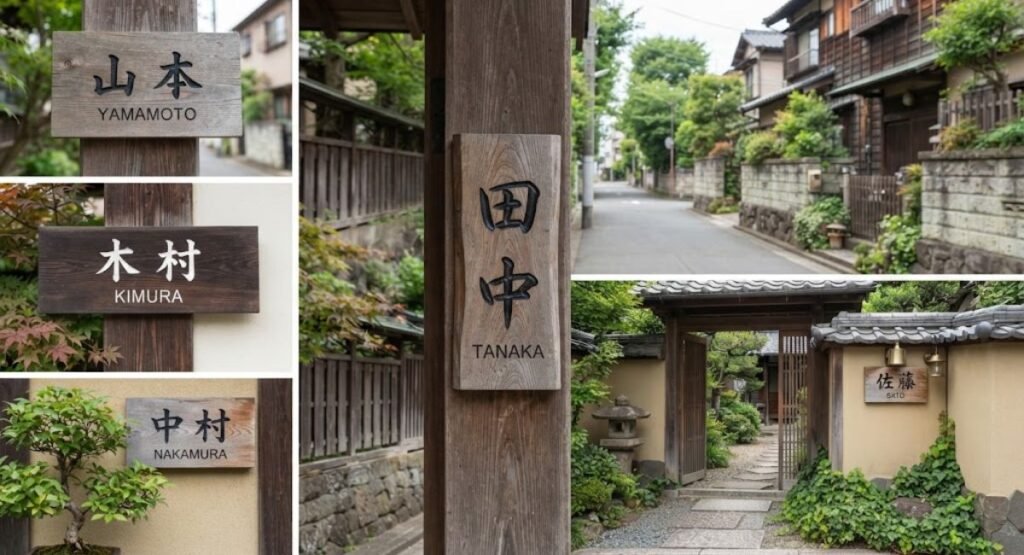
Here’s what these Japanese House Names actually say once translated, so you can pick a name for the meaning first and the sound second.
See also 300+ Japanese Names Meaning Poison: Venom & Toxin Picks
- Fuji-Tei (foo-jee-teh-ee) 🇬🇧 Wisteria’s the formal real-world suffix used for notable homes (藤邸)
- Fuji-An (foo-jee-ahn) 🇬🇧 Wisteria’s a small (藤庵)
- Fuji-Sou (foo-jee-soh) 🇬🇧 Wisteria’s a common real suffix for Japanese apartment buildings and boarding houses (藤荘)
- Fuji-Kan (foo-jee-kahn) 🇬🇧 Real-style name Wisteria’s k, echoes real hot-spring inn names across Japan (藤館)
- Fuji-Ya (foo-jee-yah) 🇬🇧 Wisteria’s the root of yagō (藤屋)
- Fuji-Kyo (foo-jee-kyoh) 🇬🇧 Wisteria’s a quiet (藤居)
- Fuji-Dou (foo-jee-doh) 🇬🇧 Wisteria’s often used for a study (藤堂)
- Fuji-Rou (foo-jee-roh) 🇬🇧 Wisteria’s an elevated (藤楼)
- Ran-Tei (rahn-teh-ee) 🇬🇧 Orchid’s the formal real-world suffix used for notable homes (蘭邸)
- Ran-An (rahn-ahn) 🇬🇧 Orchid’s a small (蘭庵)
- Ran-Sou (rahn-soh) 🇬🇧 Orchid’s a common real suffix for Japanese apartment buildings and boarding houses (蘭荘)
- Ran-Kan (rahn-kahn) 🇬🇧 Orchid’s a grand (蘭館)
- Ran-Ya (rahn-yah) 🇬🇧 Orchid’s the root of yagō (蘭屋)
- Ran-Kyo (rahn-kyoh) 🇬🇧 Orchid’s a quiet (蘭居)
- Ran-Dou (rahn-doh) 🇬🇧 Orchid’s often used for a study (蘭堂)
- Ran-Rou (rahn-roh) 🇬🇧 Orchid’s an elevated (蘭楼)
- Tsubaki-Tei (tsoo-bah-kee-teh-ee) 🇬🇧 Camellia’s the formal real-world suffix used for notable homes (椿邸)
- Tsubaki-An (tsoo-bah-kee-ahn) 🇬🇧 Camellia’s a small (椿庵)
- Tsubaki-Sou (tsoo-bah-kee-soh) 🇬🇧 Camellia’s a common real suffix for Japanese apartment buildings and boarding houses (椿荘)
- Tsubaki-Kan (tsoo-bah-kee-kahn) 🇬🇧 Camellia’s a grand (椿館)
- Tsubaki-Ya (tsoo-bah-kee-yah) 🇬🇧 Camellia’s the root of yagō (椿屋)
- Tsubaki-Kyo (tsoo-bah-kee-kyoh) 🇬🇧 Camellia’s a quiet (椿居)
- Tsubaki-Dou (tsoo-bah-kee-doh) 🇬🇧 Camellia’s often used for a study (椿堂)
- Tsubaki-Rou (tsoo-bah-kee-roh) 🇬🇧 Camellia’s an elevated (椿楼)
- Hasu-Tei (hah-soo-teh-ee) 🇬🇧 Lotus’s the formal real-world suffix used for notable homes (蓮邸)
- Hasu-An (hah-soo-ahn) 🇬🇧 Lotus’s a small (蓮庵)
- Hasu-Sou (hah-soo-soh) 🇬🇧 Lotus’s a common real suffix for Japanese apartment buildings and boarding houses (蓮荘)
- Hasu-Kan (hah-soo-kahn) 🇬🇧 Lotus’s a grand (蓮館)
- Hasu-Ya (hah-soo-yah) 🇬🇧 Lotus’s the root of yagō (蓮屋)
- Hasu-Kyo (hah-soo-kyoh) 🇬🇧 Lotus’s a quiet (蓮居)
- Hasu-Dou (hah-soo-doh) 🇬🇧 Lotus’s often used for a study (蓮堂)
- Hasu-Rou (hah-soo-roh) 🇬🇧 Lotus’s an elevated (蓮楼)
- Hoshi-Tei (hoh-shee-teh-ee) 🇬🇧 Star’s the formal real-world suffix used for notable homes (星邸)
- Hoshi-An (hoh-shee-ahn) 🇬🇧 Star’s a small (星庵)
- Hoshi-Sou (hoh-shee-soh) 🇬🇧 Star’s a common real suffix for Japanese apartment buildings and boarding houses (星荘)
- Hoshi-Kan (hoh-shee-kahn) 🇬🇧 Star’s a grand (星館)
- Hoshi-Ya (hoh-shee-yah) 🇬🇧 Star’s the root of yagō (星屋)
- Hoshi-Kyo (hoh-shee-kyoh) 🇬🇧 Star’s a quiet (星居)
- Hoshi-Dou (hoh-shee-doh) 🇬🇧 Star’s often used for a study (星堂)
- Hoshi-Rou (hoh-shee-roh) 🇬🇧 Star’s an elevated (星楼)
- Sora-Tei (soh-rah-teh-ee) 🇬🇧 Sky’s the formal real-world suffix used for notable homes (空邸)
- Sora-An (soh-rah-ahn) 🇬🇧 Sky’s a small (空庵)
- Sora-Sou (soh-rah-soh) 🇬🇧 Sky’s a common real suffix for Japanese apartment buildings and boarding houses (空荘)
- Sora-Kan (soh-rah-kahn) 🇬🇧 Sky’s a grand (空館)
- Sora-Ya (soh-rah-yah) 🇬🇧 Sky’s the root of yagō (空屋)
- Sora-Kyo (soh-rah-kyoh) 🇬🇧 Sky’s a quiet (空居)
- Sora-Dou (soh-rah-doh) 🇬🇧 Sky’s often used for a study (空堂)
- Sora-Rou (soh-rah-roh) 🇬🇧 Sky’s an elevated (空楼)
- Umi-Tei (oo-mee-teh-ee) 🇬🇧 Sea’s the formal real-world suffix used for notable homes (海邸)
- Umi-An (oo-mee-ahn) 🇬🇧 Sea’s a small (海庵)
- Umi-Sou (oo-mee-soh) 🇬🇧 Sea’s a common real suffix for Japanese apartment buildings and boarding houses (海荘)
- Umi-Kan (oo-mee-kahn) 🇬🇧 Real-style name Sea’s k, echoes real seaside hotel and museum names (海館)
- Umi-Ya (oo-mee-yah) 🇬🇧 Sea’s the root of yagō (海屋)
- Umi-Kyo (oo-mee-kyoh) 🇬🇧 Sea’s a quiet (海居)
- Umi-Dou (oo-mee-doh) 🇬🇧 Sea’s often used for a study (海堂)
- Umi-Rou (oo-mee-roh) 🇬🇧 Sea’s an elevated (海楼)
- Yama-Tei (yah-mah-teh-ee) 🇬🇧 Mountain’s the formal real-world suffix used for notable homes (山邸)
- Yama-An (yah-mah-ahn) 🇬🇧 Mountain’s a small (山庵)
- Yama-Sou (yah-mah-soh) 🇬🇧 Real-style name Mountain’s s, a real, common mountain-lodge name style (山荘)
- Yama-Kan (yah-mah-kahn) 🇬🇧 Mountain’s a grand (山館)
- Yama-Ya (yah-mah-yah) 🇬🇧 Mountain’s the root of yagō (山屋)
- Yama-Kyo (yah-mah-kyoh) 🇬🇧 Mountain’s a quiet (山居)
- Yama-Dou (yah-mah-doh) 🇬🇧 Mountain’s often used for a study (山堂)
- Yama-Rou (yah-mah-roh) 🇬🇧 Mountain’s an elevated (山楼)
- Kawa-Tei (kah-wah-teh-ee) 🇬🇧 Real-style name — River’s t, a real riverside restaurant and inn naming style (川邸)
- Kawa-An (kah-wah-ahn) 🇬🇧 River’s a small (川庵)
- Kawa-Sou (kah-wah-soh) 🇬🇧 River’s a common real suffix for Japanese apartment buildings and boarding houses (川荘)
- Kawa-Kan (kah-wah-kahn) 🇬🇧 River’s a grand (川館)
- Kawa-Ya (kah-wah-yah) 🇬🇧 River’s the root of yagō (川屋)
- Kawa-Kyo (kah-wah-kyoh) 🇬🇧 River’s a quiet (川居)
- Kawa-Dou (kah-wah-doh) 🇬🇧 River’s often used for a study (川堂)
- Kawa-Rou (kah-wah-roh) 🇬🇧 River’s an elevated (川楼)
- Taki-Tei (tah-kee-teh-ee) 🇬🇧 Waterfall’s the formal real-world suffix used for notable homes (滝邸)
- Taki-An (tah-kee-ahn) 🇬🇧 Waterfall’s a small (滝庵)
- Taki-Sou (tah-kee-soh) 🇬🇧 Waterfall’s a common real suffix for Japanese apartment buildings and boarding houses (滝荘)
- Taki-Kan (tah-kee-kahn) 🇬🇧 Waterfall’s a grand (滝館)
- Taki-Ya (tah-kee-yah) 🇬🇧 Waterfall’s the root of yagō (滝屋)
- Taki-Kyo (tah-kee-kyoh) 🇬🇧 Waterfall’s a quiet (滝居)
- Taki-Dou (tah-kee-doh) 🇬🇧 Waterfall’s often used for a study (滝堂)
- Taki-Rou (tah-kee-roh) 🇬🇧 Waterfall’s an elevated (滝楼)
- Shizuku-Tei (shee-zoo-koo-teh-ee) 🇬🇧 Dewdrop’s the formal real-world suffix used for notable homes (雫邸)
- Shizuku-An (shee-zoo-koo-ahn) 🇬🇧 Dewdrop’s a small (雫庵)
- Shizuku-Sou (shee-zoo-koo-soh) 🇬🇧 Dewdrop’s a common real suffix for Japanese apartment buildings and boarding houses (雫荘)
- Shizuku-Kan (shee-zoo-koo-kahn) 🇬🇧 Dewdrop’s a grand (雫館)
- Shizuku-Ya (shee-zoo-koo-yah) 🇬🇧 Dewdrop’s the root of yagō (雫屋)
- Shizuku-Kyo (shee-zoo-koo-kyoh) 🇬🇧 Dewdrop’s a quiet (雫居)
- Shizuku-Dou (shee-zoo-koo-doh) 🇬🇧 Dewdrop’s often used for a study (雫堂)
- Shizuku-Rou (shee-zoo-koo-roh) 🇬🇧 Dewdrop’s an elevated (雫楼)
- Hotaru-Tei (hoh-tah-roo-teh-ee) 🇬🇧 Firefly’s the formal real-world suffix used for notable homes (蛍邸)
- Hotaru-An (hoh-tah-roo-ahn) 🇬🇧 Firefly’s a small (蛍庵)
- Hotaru-Sou (hoh-tah-roo-soh) 🇬🇧 Firefly’s a common real suffix for Japanese apartment buildings and boarding houses (蛍荘)
- Hotaru-Kan (hoh-tah-roo-kahn) 🇬🇧 Firefly’s a grand (蛍館)
- Hotaru-Ya (hoh-tah-roo-yah) 🇬🇧 Firefly’s the root of yagō (蛍屋)
- Hotaru-Kyo (hoh-tah-roo-kyoh) 🇬🇧 Firefly’s a quiet (蛍居)
- Hotaru-Dou (hoh-tah-roo-doh) 🇬🇧 Firefly’s often used for a study (蛍堂)
- Hotaru-Rou (hoh-tah-roo-roh) 🇬🇧 Firefly’s an elevated (蛍楼)
- Nagomi-Tei (nah-goh-mee-teh-ee) 🇬🇧 Gentle harmony’s the formal real-world suffix used for notable homes (和み邸)
- Nagomi-An (nah-goh-mee-ahn) 🇬🇧 Gentle harmony’s a small (和み庵)
- Nagomi-Sou (nah-goh-mee-soh) 🇬🇧 Gentle harmony’s a common real suffix for Japanese apartment buildings and boarding houses (和み荘)
- Nagomi-Kan (nah-goh-mee-kahn) 🇬🇧 Gentle harmony’s a grand (和み館)
- Nagomi-Ya (nah-goh-mee-yah) 🇬🇧 Gentle harmony’s the root of yagō (和み屋)
- Nagomi-Kyo (nah-goh-mee-kyoh) 🇬🇧 Gentle harmony’s a quiet (和み居)
- Nagomi-Dou (nah-goh-mee-doh) 🇬🇧 Gentle harmony’s often used for a study (和み堂)
- Nagomi-Rou (nah-goh-mee-roh) 🇬🇧 Gentle harmony’s an elevated (和み楼)
- Wabi-Tei (wah-bee-teh-ee) 🇬🇧 Quiet simplicity’s the formal real-world suffix used for notable homes (侘邸)
- Wabi-An (wah-bee-ahn) 🇬🇧 Quiet simplicity’s a small (侘庵)
- Wabi-Sou (wah-bee-soh) 🇬🇧 Quiet simplicity’s a common real suffix for Japanese apartment buildings and boarding houses (侘荘)
- Wabi-Kan (wah-bee-kahn) 🇬🇧 Quiet simplicity’s a grand (侘館)
- Wabi-Ya (wah-bee-yah) 🇬🇧 Quiet simplicity’s the root of yagō (侘屋)
- Wabi-Kyo (wah-bee-kyoh) 🇬🇧 Quiet simplicity’s a quiet (侘居)
- Wabi-Dou (wah-bee-doh) 🇬🇧 Quiet simplicity’s often used for a study (侘堂)
- Wabi-Rou (wah-bee-roh) 🇬🇧 Quiet simplicity’s an elevated (侘楼)
- Yuugen-Tei (yoo-gehn-teh-ee) 🇬🇧 Mysterious grace’s the formal real-world suffix used for notable homes (幽玄邸)
- Yuugen-An (yoo-gehn-ahn) 🇬🇧 Mysterious grace’s a small (幽玄庵)
- Yuugen-Sou (yoo-gehn-soh) 🇬🇧 Mysterious grace’s a common real suffix for Japanese apartment buildings and boarding houses (幽玄荘)
- Yuugen-Kan (yoo-gehn-kahn) 🇬🇧 Mysterious grace’s a grand (幽玄館)
- Yuugen-Ya (yoo-gehn-yah) 🇬🇧 Mysterious grace’s the root of yagō (幽玄屋)
- Yuugen-Kyo (yoo-gehn-kyoh) 🇬🇧 Mysterious grace’s a quiet (幽玄居)
- Yuugen-Dou (yoo-gehn-doh) 🇬🇧 Mysterious grace’s often used for a study (幽玄堂)
- Yuugen-Rou (yoo-gehn-roh) 🇬🇧 Mysterious grace’s an elevated (幽玄楼)
Japanese Mansion Names
For a grander residence, these Japanese House Names lean on tei (邸), kan (館), and rou (楼), the three suffixes most associated with formal, stately homes in real Japanese usage.
See also 400+ Best Japanese Names That Mean Ice Or Snow: Frost & Winter Picks
- Sakura-Tei (sah-koo-rah-teh-ee) 🏛️ Real-style name Cherry blossom’s t, a genuinely common real restaurant and guesthouse name across Japan (桜邸)
- Sakura-Kan (sah-koo-rah-kahn) 🏛️ Cherry blossom’s a grand (桜館)
- Sakura-Rou (sah-koo-rah-roh) 🏛️ Cherry blossom’s an elevated (桜楼)
- Tsuki-Tei (tsoo-kee-teh-ee) 🏛️ Moon’s the formal real-world suffix used for notable homes (月邸)
- Tsuki-Kan (tsoo-kee-kahn) 🏛️ Moon’s a grand (月館)
- Tsuki-Rou (tsoo-kee-roh) 🏛️ Moon’s an elevated (月楼)
- Yuki-Tei (yoo-kee-teh-ee) 🏛️ Snow’s the formal real-world suffix used for notable homes (雪邸)
- Yuki-Kan (yoo-kee-kahn) 🏛️ Snow’s a grand (雪館)
- Yuki-Rou (yoo-kee-roh) 🏛️ Snow’s an elevated (雪楼)
- Kaze-Tei (kah-zeh-teh-ee) 🏛️ Wind’s the formal real-world suffix used for notable homes (風邸)
- Kaze-Kan (kah-zeh-kahn) 🏛️ Wind’s a grand (風館)
- Kaze-Rou (kah-zeh-roh) 🏛️ Wind’s an elevated (風楼)
- Mori-Tei (moh-ree-teh-ee) 🏛️ Forest’s the formal real-world suffix used for notable homes (森邸)
- Mori-Kan (moh-ree-kahn) 🏛️ Forest’s a grand (森館)
- Mori-Rou (moh-ree-roh) 🏛️ Forest’s an elevated (森楼)
- Izumi-Tei (ee-zoo-mee-teh-ee) 🏛️ Spring water’s the formal real-world suffix used for notable homes (泉邸)
- Izumi-Kan (ee-zoo-mee-kahn) 🏛️ Spring water’s a grand (泉館)
- Izumi-Rou (ee-zoo-mee-roh) 🏛️ Spring water’s an elevated (泉楼)
- Take-Tei (tah-keh-teh-ee) 🏛️ Bamboo’s the formal real-world suffix used for notable homes (竹邸)
- Take-Kan (tah-keh-kahn) 🏛️ Bamboo’s a grand (竹館)
- Take-Rou (tah-keh-roh) 🏛️ Bamboo’s an elevated (竹楼)
- Matsu-Tei (mah-tsoo-teh-ee) 🏛️ Real-style name Pine’s t, a real, classic restaurant naming style, matsutei (松邸)
- Matsu-Kan (mah-tsoo-kahn) 🏛️ Pine’s a grand (松館)
- Matsu-Rou (mah-tsoo-roh) 🏛️ Pine’s an elevated (松楼)
- Ume-Tei (oo-meh-teh-ee) 🏛️ Real-style name Plum blossom’s t, a real, traditional restaurant and inn name (梅邸)
- Ume-Kan (oo-meh-kahn) 🏛️ Plum blossom’s a grand (梅館)
- Ume-Rou (oo-meh-roh) 🏛️ Plum blossom’s an elevated (梅楼)
- Kiku-Tei (kee-koo-teh-ee) 🏛️ Chrysanthemum’s the formal real-world suffix used for notable homes (菊邸)
- Kiku-Kan (kee-koo-kahn) 🏛️ Chrysanthemum’s a grand (菊館)
- Kiku-Rou (kee-koo-roh) 🏛️ Chrysanthemum’s an elevated (菊楼)
- Fuji-Tei (foo-jee-teh-ee) 🏛️ Wisteria’s the formal real-world suffix used for notable homes (藤邸)
- Fuji-Kan (foo-jee-kahn) 🏛️ Real-style name Wisteria’s k, echoes real hot-spring inn names across Japan (藤館)
- Fuji-Rou (foo-jee-roh) 🏛️ Wisteria’s an elevated (藤楼)
- Ran-Tei (rahn-teh-ee) 🏛️ Orchid’s the formal real-world suffix used for notable homes (蘭邸)
- Ran-Kan (rahn-kahn) 🏛️ Orchid’s a grand (蘭館)
- Ran-Rou (rahn-roh) 🏛️ Orchid’s an elevated (蘭楼)
- Tsubaki-Tei (tsoo-bah-kee-teh-ee) 🏛️ Camellia’s the formal real-world suffix used for notable homes (椿邸)
- Tsubaki-Kan (tsoo-bah-kee-kahn) 🏛️ Camellia’s a grand (椿館)
- Tsubaki-Rou (tsoo-bah-kee-roh) 🏛️ Camellia’s an elevated (椿楼)
- Hasu-Tei (hah-soo-teh-ee) 🏛️ Lotus’s the formal real-world suffix used for notable homes (蓮邸)
- Hasu-Kan (hah-soo-kahn) 🏛️ Lotus’s a grand (蓮館)
- Hasu-Rou (hah-soo-roh) 🏛️ Lotus’s an elevated (蓮楼)
- Hoshi-Tei (hoh-shee-teh-ee) 🏛️ Star’s the formal real-world suffix used for notable homes (星邸)
- Hoshi-Kan (hoh-shee-kahn) 🏛️ Star’s a grand (星館)
- Hoshi-Rou (hoh-shee-roh) 🏛️ Star’s an elevated (星楼)
- Kokoro-Tei (koh-koh-roh-teh-ee) 🏛️ Heart and spirit’s the formal real-world suffix used for notable homes (心邸)
- Kokoro-Kan (koh-koh-roh-kahn) 🏛️ Heart and spirit’s a grand (心館)
- Kokoro-Rou (koh-koh-roh-roh) 🏛️ Heart and spirit’s an elevated (心楼)
- Akari-Tei (ah-kah-ree-teh-ee) 🏛️ Soft light’s the formal real-world suffix used for notable homes (灯り邸)
- Akari-Kan (ah-kah-ree-kahn) 🏛️ Soft light’s a grand (灯り館)
- Akari-Rou (ah-kah-ree-roh) 🏛️ Soft light’s an elevated (灯り楼)
- Nozomi-Tei (noh-zoh-mee-teh-ee) 🏛️ Hope’s the formal real-world suffix used for notable homes (望邸)
- Nozomi-Kan (noh-zoh-mee-kahn) 🏛️ Hope’s a grand (望館)
- Nozomi-Rou (noh-zoh-mee-roh) 🏛️ Hope’s an elevated (望楼)
- Megumi-Tei (meh-goo-mee-teh-ee) 🏛️ Blessing’s the formal real-world suffix used for notable homes (恵邸)
- Megumi-Kan (meh-goo-mee-kahn) 🏛️ Blessing’s a grand (恵館)
- Megumi-Rou (meh-goo-mee-roh) 🏛️ Blessing’s an elevated (恵楼)
- Shinrin-Tei (sheen-reen-teh-ee) 🏛️ Woodland’s the formal real-world suffix used for notable homes (森林邸)
- Shinrin-Kan (sheen-reen-kahn) 🏛️ Woodland’s a grand (森林館)
- Shinrin-Rou (sheen-reen-roh) 🏛️ Woodland’s an elevated (森林楼)
Spiritual Japanese House Names
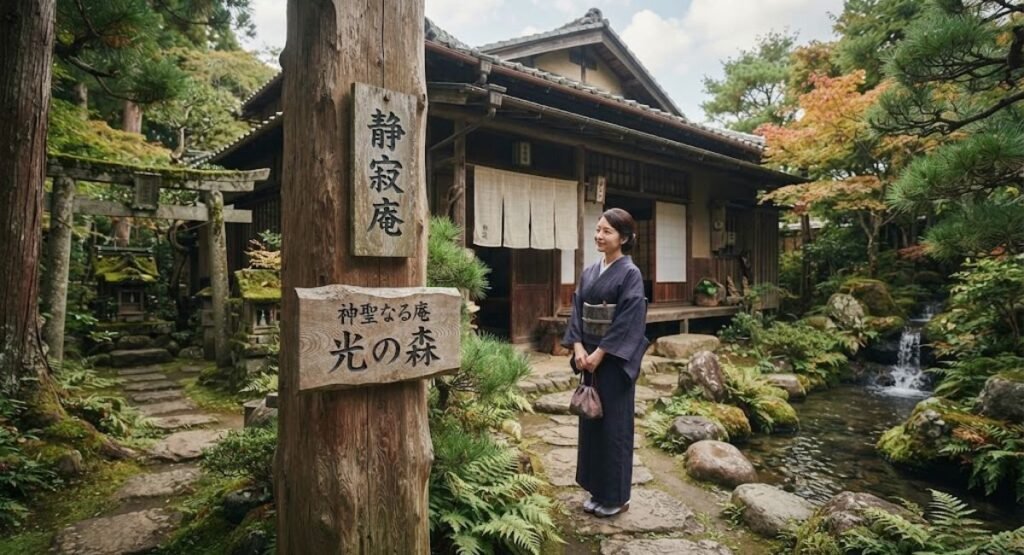
Rooted in an (庵), kyo (居), and dou (堂), these Japanese House Names suit a quiet retreat, meditation room, or home built around calm rather than grandeur.
- Shizuku-An (shee-zoo-koo-ahn) 🙏 Dewdrop’s a small (雫庵)
- Shizuku-Kyo (shee-zoo-koo-kyoh) 🙏 Dewdrop’s a quiet (雫居)
- Shizuku-Dou (shee-zoo-koo-doh) 🙏 Dewdrop’s often used for a study (雫堂)
- Hotaru-An (hoh-tah-roo-ahn) 🙏 Firefly’s a small (蛍庵)
- Hotaru-Kyo (hoh-tah-roo-kyoh) 🙏 Firefly’s a quiet (蛍居)
- Hotaru-Dou (hoh-tah-roo-doh) 🙏 Firefly’s often used for a study (蛍堂)
- Nagomi-An (nah-goh-mee-ahn) 🙏 Gentle harmony’s a small (和み庵)
- Nagomi-Kyo (nah-goh-mee-kyoh) 🙏 Gentle harmony’s a quiet (和み居)
- Nagomi-Dou (nah-goh-mee-doh) 🙏 Gentle harmony’s often used for a study (和み堂)
- Wabi-An (wah-bee-ahn) 🙏 Quiet simplicity’s a small (侘庵)
- Wabi-Kyo (wah-bee-kyoh) 🙏 Quiet simplicity’s a quiet (侘居)
- Wabi-Dou (wah-bee-doh) 🙏 Quiet simplicity’s often used for a study (侘堂)
- Yuugen-An (yoo-gehn-ahn) 🙏 Mysterious grace’s a small (幽玄庵)
- Yuugen-Kyo (yoo-gehn-kyoh) 🙏 Mysterious grace’s a quiet (幽玄居)
- Yuugen-Dou (yoo-gehn-doh) 🙏 Mysterious grace’s often used for a study (幽玄堂)
- Kokoro-An (koh-koh-roh-ahn) 🙏 Heart and spirit’s a small (心庵)
- Kokoro-Kyo (koh-koh-roh-kyoh) 🙏 Heart and spirit’s a quiet (心居)
- Kokoro-Dou (koh-koh-roh-doh) 🙏 Heart and spirit’s often used for a study (心堂)
- Akari-An (ah-kah-ree-ahn) 🙏 Soft light’s a small (灯り庵)
- Akari-Kyo (ah-kah-ree-kyoh) 🙏 Soft light’s a quiet (灯り居)
- Akari-Dou (ah-kah-ree-doh) 🙏 Soft light’s often used for a study (灯り堂)
- Nozomi-An (noh-zoh-mee-ahn) 🙏 Hope’s a small (望庵)
- Nozomi-Kyo (noh-zoh-mee-kyoh) 🙏 Hope’s a quiet (望居)
- Nozomi-Dou (noh-zoh-mee-doh) 🙏 Hope’s often used for a study (望堂)
- Megumi-An (meh-goo-mee-ahn) 🙏 Blessing’s a small (恵庵)
- Megumi-Kyo (meh-goo-mee-kyoh) 🙏 Blessing’s a quiet (恵居)
- Megumi-Dou (meh-goo-mee-doh) 🙏 Blessing’s often used for a study (恵堂)
- Shinrin-An (sheen-reen-ahn) 🙏 Woodland’s a small (森林庵)
- Shinrin-Kyo (sheen-reen-kyoh) 🙏 Woodland’s a quiet (森林居)
- Shinrin-Dou (sheen-reen-doh) 🙏 Woodland’s often used for a study (森林堂)
- Sakura-An (sah-koo-rah-ahn) 🙏 Cherry blossom’s a small (桜庵)
- Sakura-Kyo (sah-koo-rah-kyoh) 🙏 Cherry blossom’s a quiet (桜居)
- Sakura-Dou (sah-koo-rah-doh) 🙏 Cherry blossom’s often used for a study (桜堂)
- Tsuki-An (tsoo-kee-ahn) 🙏 Real-style name Moon’s a, a real, widely used name for tea houses and ryokan (月庵)
- Tsuki-Kyo (tsoo-kee-kyoh) 🙏 Moon’s a quiet (月居)
- Tsuki-Dou (tsoo-kee-doh) 🙏 Moon’s often used for a study (月堂)
- Yuki-An (yoo-kee-ahn) 🙏 Snow’s a small (雪庵)
- Yuki-Kyo (yoo-kee-kyoh) 🙏 Snow’s a quiet (雪居)
- Yuki-Dou (yoo-kee-doh) 🙏 Snow’s often used for a study (雪堂)
- Kaze-An (kah-zeh-ahn) 🙏 Wind’s a small (風庵)
- Kaze-Kyo (kah-zeh-kyoh) 🙏 Wind’s a quiet (風居)
- Kaze-Dou (kah-zeh-doh) 🙏 Wind’s often used for a study (風堂)
- Mori-An (moh-ree-ahn) 🙏 Forest’s a small (森庵)
- Mori-Kyo (moh-ree-kyoh) 🙏 Forest’s a quiet (森居)
- Mori-Dou (moh-ree-doh) 🙏 Forest’s often used for a study (森堂)
- Izumi-An (ee-zoo-mee-ahn) 🙏 Spring water’s a small (泉庵)
- Izumi-Kyo (ee-zoo-mee-kyoh) 🙏 Spring water’s a quiet (泉居)
- Izumi-Dou (ee-zoo-mee-doh) 🙏 Spring water’s often used for a study (泉堂)
- Take-An (tah-keh-ahn) 🙏 Real-style name Bamboo’s a, a real, classic hermitage-style name tied to bamboo groves (竹庵)
- Take-Kyo (tah-keh-kyoh) 🙏 Bamboo’s a quiet (竹居)
- Take-Dou (tah-keh-doh) 🙏 Bamboo’s often used for a study (竹堂)
- Matsu-An (mah-tsoo-ahn) 🙏 Pine’s a small (松庵)
- Matsu-Kyo (mah-tsoo-kyoh) 🙏 Pine’s a quiet (松居)
- Matsu-Dou (mah-tsoo-doh) 🙏 Pine’s often used for a study (松堂)
Ancient Japanese House Names
Drawing on ya (屋), the suffix behind yagō itself, alongside tei and an, these Japanese House Names echo the historic naming style still seen on old shopfronts and inns today.
See also 250+ Best Japanese Names That Mean Night: Stars & Moonlit Picks
- Sakura-Tei (sah-koo-rah-teh-ee) ⛩️ Real-style name Cherry blossom’s t, a genuinely common real restaurant and guesthouse name across Japan (桜邸)
- Sakura-An (sah-koo-rah-ahn) ⛩️ Cherry blossom’s a small (桜庵)
- Sakura-Ya (sah-koo-rah-yah) ⛩️ Cherry blossom’s the root of yagō (桜屋)
- Tsuki-Tei (tsoo-kee-teh-ee) ⛩️ Moon’s the formal real-world suffix used for notable homes (月邸)
- Tsuki-An (tsoo-kee-ahn) ⛩️ Real-style name Moon’s a, a real, widely used name for tea houses and ryokan (月庵)
- Tsuki-Ya (tsoo-kee-yah) ⛩️ Moon’s the root of yagō (月屋)
- Yuki-Tei (yoo-kee-teh-ee) ⛩️ Snow’s the formal real-world suffix used for notable homes (雪邸)
- Yuki-An (yoo-kee-ahn) ⛩️ Snow’s a small (雪庵)
- Yuki-Ya (yoo-kee-yah) ⛩️ Snow’s the root of yagō (雪屋)
- Kaze-Tei (kah-zeh-teh-ee) ⛩️ Wind’s the formal real-world suffix used for notable homes (風邸)
- Kaze-An (kah-zeh-ahn) ⛩️ Wind’s a small (風庵)
- Kaze-Ya (kah-zeh-yah) ⛩️ Wind’s the root of yagō (風屋)
- Mori-Tei (moh-ree-teh-ee) ⛩️ Forest’s the formal real-world suffix used for notable homes (森邸)
- Mori-An (moh-ree-ahn) ⛩️ Forest’s a small (森庵)
- Mori-Ya (moh-ree-yah) ⛩️ Forest’s the root of yagō (森屋)
- Izumi-Tei (ee-zoo-mee-teh-ee) ⛩️ Spring water’s the formal real-world suffix used for notable homes (泉邸)
- Izumi-An (ee-zoo-mee-ahn) ⛩️ Spring water’s a small (泉庵)
- Izumi-Ya (ee-zoo-mee-yah) ⛩️ Spring water’s the root of yagō (泉屋)
- Take-Tei (tah-keh-teh-ee) ⛩️ Bamboo’s the formal real-world suffix used for notable homes (竹邸)
- Take-An (tah-keh-ahn) ⛩️ Real-style name Bamboo’s a, a real, classic hermitage-style name tied to bamboo groves (竹庵)
- Take-Ya (tah-keh-yah) ⛩️ Bamboo’s the root of yagō (竹屋)
- Matsu-Tei (mah-tsoo-teh-ee) ⛩️ Real-style name Pine’s t, a real, classic restaurant naming style, matsutei (松邸)
- Matsu-An (mah-tsoo-ahn) ⛩️ Pine’s a small (松庵)
- Matsu-Ya (mah-tsoo-yah) ⛩️ Real-style name Pine’s y, a genuinely common real shop and inn name, matsuya (松屋)
- Ume-Tei (oo-meh-teh-ee) ⛩️ Real-style name Plum blossom’s t, a real, traditional restaurant and inn name (梅邸)
- Ume-An (oo-meh-ahn) ⛩️ Plum blossom’s a small (梅庵)
- Ume-Ya (oo-meh-yah) ⛩️ Plum blossom’s the root of yagō (梅屋)
- Kiku-Tei (kee-koo-teh-ee) ⛩️ Chrysanthemum’s the formal real-world suffix used for notable homes (菊邸)
- Kiku-An (kee-koo-ahn) ⛩️ Chrysanthemum’s a small (菊庵)
- Kiku-Ya (kee-koo-yah) ⛩️ Chrysanthemum’s the root of yagō (菊屋)
- Fuji-Tei (foo-jee-teh-ee) ⛩️ Wisteria’s the formal real-world suffix used for notable homes (藤邸)
- Fuji-An (foo-jee-ahn) ⛩️ Wisteria’s a small (藤庵)
- Fuji-Ya (foo-jee-yah) ⛩️ Wisteria’s the root of yagō (藤屋)
- Ran-Tei (rahn-teh-ee) ⛩️ Orchid’s the formal real-world suffix used for notable homes (蘭邸)
- Ran-An (rahn-ahn) ⛩️ Orchid’s a small (蘭庵)
- Ran-Ya (rahn-yah) ⛩️ Orchid’s the root of yagō (蘭屋)
- Sora-Tei (soh-rah-teh-ee) ⛩️ Sky’s the formal real-world suffix used for notable homes (空邸)
- Sora-An (soh-rah-ahn) ⛩️ Sky’s a small (空庵)
- Sora-Ya (soh-rah-yah) ⛩️ Sky’s the root of yagō (空屋)
- Umi-Tei (oo-mee-teh-ee) ⛩️ Sea’s the formal real-world suffix used for notable homes (海邸)
- Umi-An (oo-mee-ahn) ⛩️ Sea’s a small (海庵)
- Umi-Ya (oo-mee-yah) ⛩️ Sea’s the root of yagō (海屋)
- Yama-Tei (yah-mah-teh-ee) ⛩️ Mountain’s the formal real-world suffix used for notable homes (山邸)
- Yama-An (yah-mah-ahn) ⛩️ Mountain’s a small (山庵)
- Yama-Ya (yah-mah-yah) ⛩️ Mountain’s the root of yagō (山屋)
- Kawa-Tei (kah-wah-teh-ee) ⛩️ Real-style name River’s t, a real riverside restaurant and inn naming style (川邸)
- Kawa-An (kah-wah-ahn) ⛩️ River’s a small (川庵)
- Kawa-Ya (kah-wah-yah) ⛩️ River’s the root of yagō (川屋)
- Taki-Tei (tah-kee-teh-ee) ⛩️ Waterfall’s the formal real-world suffix used for notable homes (滝邸)
- Taki-An (tah-kee-ahn) ⛩️ Waterfall’s a small (滝庵)
- Taki-Ya (tah-kee-yah) ⛩️ Waterfall’s the root of yagō (滝屋)
- Shizuku-Tei (shee-zoo-koo-teh-ee) ⛩️ Dewdrop’s the formal real-world suffix used for notable homes (雫邸)
- Shizuku-An (shee-zoo-koo-ahn) ⛩️ Dewdrop’s a small (雫庵)
- Shizuku-Ya (shee-zoo-koo-yah) ⛩️ Dewdrop’s the root of yagō (雫屋)
- Hotaru-Tei (hoh-tah-roo-teh-ee) ⛩️ Firefly’s the formal real-world suffix used for notable homes (蛍邸)
- Hotaru-An (hoh-tah-roo-ahn) ⛩️ Firefly’s a small (蛍庵)
- Hotaru-Ya (hoh-tah-roo-yah) ⛩️ Firefly’s the root of yagō (蛍屋)
- Nagomi-Tei (nah-goh-mee-teh-ee) ⛩️ Gentle harmony’s the formal real-world suffix used for notable homes (和み邸)
- Nagomi-An (nah-goh-mee-ahn) ⛩️ Gentle harmony’s a small (和み庵)
- Nagomi-Ya (nah-goh-mee-yah) ⛩️ Gentle harmony’s the root of yagō (和み屋)
- Wabi-Tei (wah-bee-teh-ee) ⛩️ Quiet simplicity’s the formal real-world suffix used for notable homes (侘邸)
- Wabi-An (wah-bee-ahn) ⛩️ Quiet simplicity’s a small (侘庵)
- Wabi-Ya (wah-bee-yah) ⛩️ Quiet simplicity’s the root of yagō (侘屋)
- Yuugen-Tei (yoo-gehn-teh-ee) ⛩️ Mysterious grace’s the formal real-world suffix used for notable homes (幽玄邸)
- Yuugen-An (yoo-gehn-ahn) ⛩️ Mysterious grace’s a small (幽玄庵)
- Yuugen-Ya (yoo-gehn-yah) ⛩️ Mysterious grace’s the root of yagō (幽玄屋)
- Kokoro-Tei (koh-koh-roh-teh-ee) ⛩️ Heart and spirit’s the formal real-world suffix used for notable homes (心邸)
- Kokoro-An (koh-koh-roh-ahn) ⛩️ Heart and spirit’s a small (心庵)
- Kokoro-Ya (koh-koh-roh-yah) ⛩️ Heart and spirit’s the root of yagō (心屋)
- Akari-Tei (ah-kah-ree-teh-ee) ⛩️ Soft light’s the formal real-world suffix used for notable homes (灯り邸)
- Akari-An (ah-kah-ree-ahn) ⛩️ Soft light’s a small (灯り庵)
- Akari-Ya (ah-kah-ree-yah) ⛩️ Soft light’s the root of yagō (灯り屋)
Why Nature Inspires So Many Japanese House Names
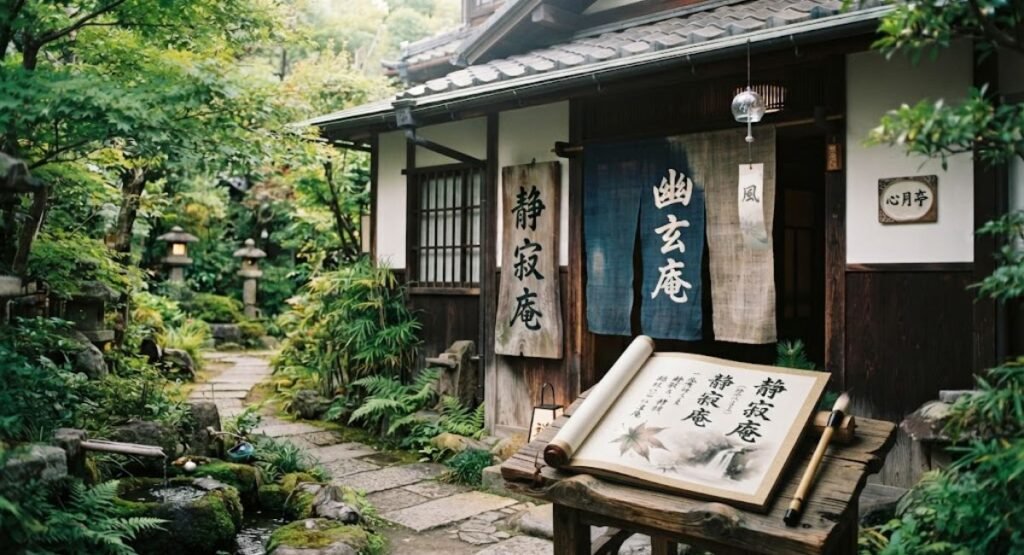
Japanese home culture has always treated the house as part of the landscape rather than separate from it, which is why so many real and traditional house names borrow directly from cherry blossoms, pine trees, moonlight, and flowing water. Naming a home after sakura or tsuki isn’t just poetic; it reflects an older belief that a house should echo the season and scenery around it, not stand apart from them.
Common Themes Behind Japanese House Names
Most Japanese House Names fall into a few repeating patterns: flowers and trees (sakura, ume, matsu), water and sky (kawa, umi, sora, tsuki), and abstract virtues (wabi, nagomi, megumi). Formality is carried entirely by the suffix, not the first word, which is exactly why the same word, like tsuki, can sound humble as Tsuki-An or stately as Tsuki-Kan depending on which ending you choose.
Best Places To Display Your House Name
Traditionally, a house name is shown on a hyōsatsu (表札), the nameplate mounted beside the front gate or door, often carved in wood or cast in metal to match the formality of the suffix you chose. Interior options include a carved beam over the entryway, a small plaque in the genkan (entrance hall), or, for a guesthouse or ryokan-style home, a hanging noren curtain bearing the name at the entrance.
Tips For Choosing The Perfect Japanese House Name
Pick the meaning first, then match it to a suffix that fits the scale and feeling of the actual building, since an (庵) undersells a mansion just as badly as kan (館) oversells a cottage. Say the full name aloud, check that the kanji combination reads naturally rather than awkwardly, and consider whether you want the name translated in English materials or kept in its original Japanese form for authenticity.
How To Make Your House Name More Personal & Memorable
Tie the first word to something genuinely true about the home, a tree actually growing in the garden, the season you moved in, or a feeling you want guests to associate with the place, rather than picking a word purely for its sound. A name that reflects a real detail, like Take-An for a house beside an actual bamboo grove, will always feel more meaningful than one chosen at random.
Quick Reference: Japanese House Names At A Glance
邸 (tei) = formal residence/mansion, 庵 (an) = hermitage, 荘 (sou) = villa, 館 (kan) = hall, 屋 (ya) = house, 居 (kyo) = dwelling, 堂 (dou) = hall/study, 楼 (rou) = tower. Pair any of these Japanese House Names suffixes with a nature or virtue word like sakura, tsuki, or megumi to build hundreds more combinations beyond this list.
Frequently Asked Questions
What is the Japanese word for house name?
The traditional term behind Japanese House Names is yagō (屋号), a centuries-old custom of naming a home, shop, or guild.
What’s a good Japanese name for a small cottage or retreat?
An (庵) is the classic suffix among Japanese House Names for a small, quiet hermitage-style home, as in Take-An or Tsuki-An.
What’s a good Japanese name for a large or formal house?
Tei (邸) and kan (館) are the two most formal suffixes among Japanese House Names, both genuinely used for real mansions and halls in Japan.
Where do Japanese families traditionally display a house name?
On a hyōsatsu, a nameplate mounted beside the front gate or door, one of the most common real uses of Japanese House Names.
What’s the difference between tei, an, and sou in Japanese House Names?
Tei is a formal, grand residence, an is a small, quiet hermitage, and sou is a villa or lodge, and all three shape Japanese House Names differently depending on scale.
Final Thoughts
Japanese House Names carry forward a genuine centuries-old tradition, yagō, that once gave ordinary families an identity before most people even had surnames. Whether you choose a grand Tei-based name for a formal residence, a quiet An-based name for a garden retreat, or a nature-rooted combination like Sakura-Sou or Megumi-Kan, you’re working with real suffixes still used across Japan today. With more than 400 options spanning unique combinations, English meanings, mansion names, spiritual retreats, and historic yagō-style picks, there’s a name here for almost any home. Pick the Japanese House Names option that feels right the moment you say it aloud. That’s usually the one that stays with you.

Founder of TheNameVibe.com where every name tells a story. Passionate about names, their meanings, and the vibes they carry.
2 thoughts on “400+ Best Japanese House Names: Unique, Sacred & Timeless”