

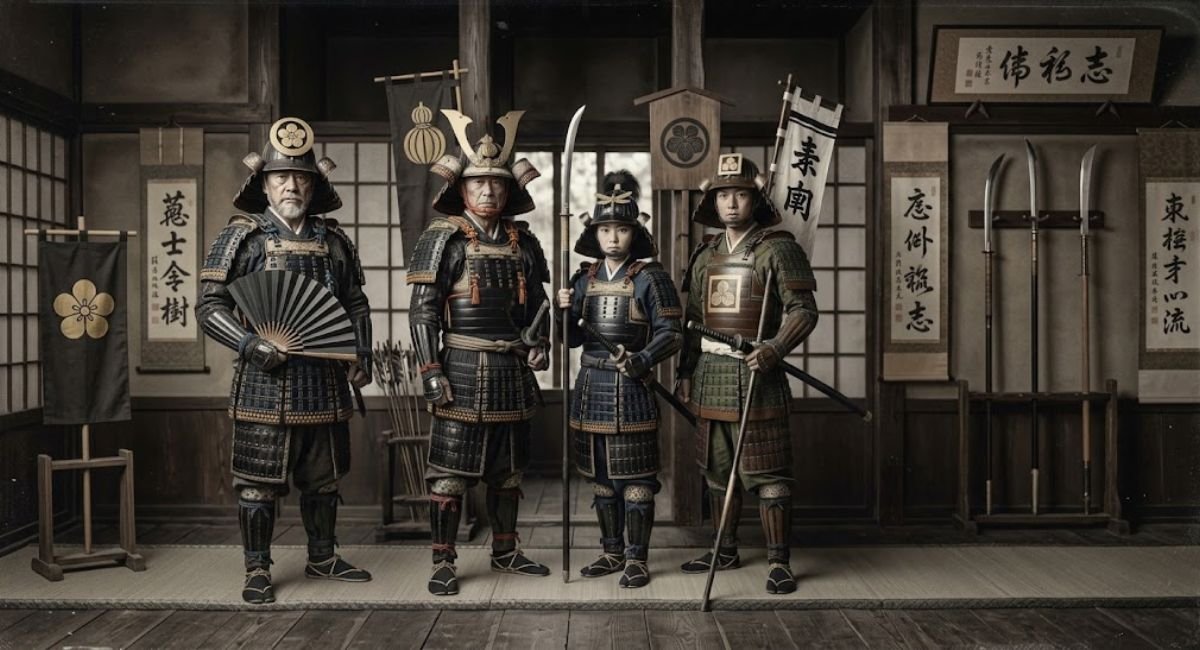
Japanese samurai names tell you who a warrior was, which clan he served and what his family hoped he would become. A samurai could carry a clan name, a childhood name, an adult name called a nanori, and even a poetic pen name. This guide separates real historical names from classic and fictional ones, so you never mistake a clan name for a first name.
You will find over 400 names with kanji, meanings and easy pronunciation, from shōguns and onna-bugeisha to rōnin and anime heroes. It also covers real titles like daimyō and hatamoto. Every section is labeled, so authenticity comes first. Say each name aloud before you decide.
How Samurai Names Work
Japanese samurai names usually combine a clan name with an adult name called a nanori, and many warriors also had a childhood name and a pen name. Learn the parts below and you can read any historical name with confidence.
How a samurai name was built
| Part | Japanese | What it is | Example |
| Clan or family name | 氏 / 名字 (uji / myōji) | Family or clan | Oda, Takeda |
| Adult name | 名乗り (nanori) | The formal given name | Nobunaga, Harunobu |
| Childhood name | 幼名 (yōmyō) | Used until adulthood | Kippōshi (Nobunaga), Takechiyo (Ieyasu) |
| Common name | 通称 (tsūshō) | Everyday name | Jirō, Kojirō |
| Pen or art name | 号 (gō) | Poetic or religious name | Shingen, Kenshin |
| Posthumous name | 戒名 (kaimyō) | Buddhist name after death | Given at death |
Classic endings you will meet
- -maru (丸): a boy’s ending, used for children and swords.
- -rō (郎): a son, often with a number, as in Jirō (second son) and Saburō (third son).
- -suke / -nosuke (介 / 之助): an old title that became a name.
- -emon / -bē (衛門 / 兵衛): old guard titles used as names.
- -gozen / -hime (御前 / 姫): honorifics for noble women.
- “no” (の): links clan and name in old Japanese, as in Minamoto no Yoshitsune.
Quick pronunciation guide
- Vowels: a = “ah”, i = “ee”, u = “oo”, e = “eh”, o = “oh”.
- A line over a vowel (ō, ū) means hold it twice as long, so Hōjō is “hoh-joh.”
- A double consonant (Shikken) means a short pause before the second sound.
- “Tsu” sounds like the “ts” in “cats” plus “oo.”
- Japanese names usually appear in family-name-first order, as in Oda Nobunaga.
Japanese Samurai Names Male
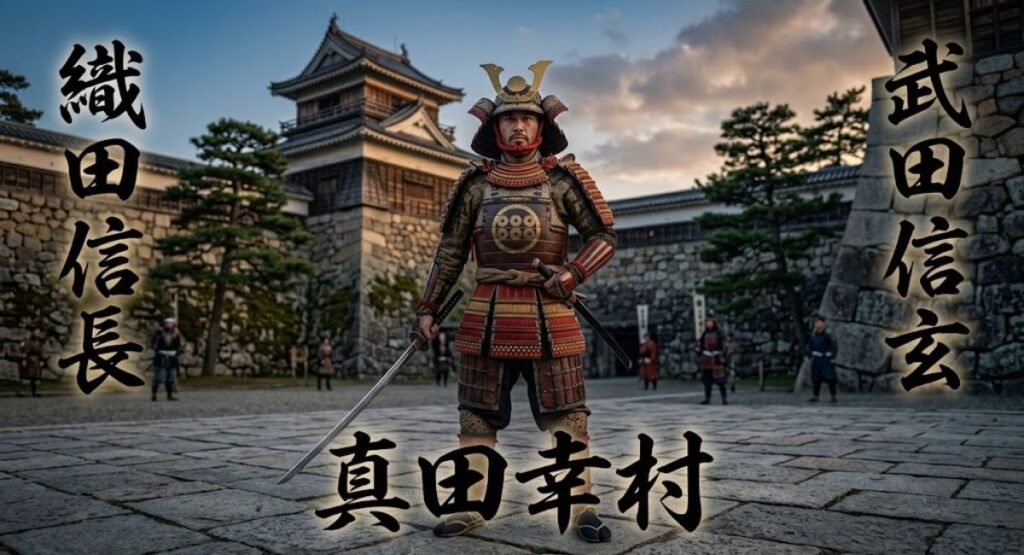
Japanese samurai names for men were mostly nanori built from virtue kanji such as 信 (faith), 忠 (loyalty), 義 (righteousness) and 秀 (excellence). The first 56 are real nanori, with the historical bearer named wherever one is well known. The last four are common names (tsūshō) that show birth order.
See also 300 + Best Japanese Names Meaning Blood: Real Kanji & Meanings
- ⚔️ Munemori (moo-neh-moh-ree) 宗盛 ancestral prosperity; Taira no Munemori
- ⚔️ Shigemori (shee-geh-moh-ree) 重盛 weighty prosperity; Taira no Shigemori, Kiyomori’s eldest son
- ⚔️ Tomomori (toh-moh-moh-ree) 知盛 wise prosperity; Taira no Tomomori, a commander at Dan-no-ura
- ⚔️ Atsumori (ah-tsoo-moh-ree) 敦盛 sincere prosperity; the young Taira warrior of the Heike story
- ⚔️ Koremori (koh-reh-moh-ree) 維盛 binding prosperity; Taira no Koremori
- ⚔️ Noritsune (noh-ree-tsoo-neh) 教経 teaching constancy; Taira no Noritsune, a famed fighter
- ⚔️ Yoshinaka (yoh-shee-nah-kah) 義仲 righteous second son; Kiso Yoshinaka
- ⚔️ Tametomo (tah-meh-toh-moh) 為朝 acting for the dynasty; Minamoto no Tametomo, a legendary archer
- ⚔️ Yorimasa (yoh-ree-mah-sah) 頼政 reliable governance; Minamoto no Yorimasa, who began the Genpei War
- ⚔️ Sanetomo (sah-neh-toh-moh) 実朝 true dynasty; third Kamakura shōgun and a poet
- ⚔️ Yoshiaki (yoh-shee-ah-kee) 義昭 righteous brightness; Ashikaga Yoshiaki, last Muromachi shōgun
- ⚔️ Yoshimasa (yoh-shee-mah-sah) 義政 righteous governance; Ashikaga Yoshimasa, patron of Ginkaku-ji
- ⚔️ Yoshimitsu (yoh-shee-mee-tsoo) 義満 righteous fullness; Ashikaga Yoshimitsu, builder of Kinkaku-ji
- ⚔️ Yoshinori (yoh-shee-noh-ree) 義教 righteous teaching; Ashikaga Yoshinori
- ⚔️ Yoshitaka (yoh-shee-tah-kah) 義隆 righteous prosperity; Ōuchi Yoshitaka
- ⚔️ Takakage (tah-kah-kah-geh) 隆景 prosperous view; Kobayakawa Takakage
- ⚔️ Nagamasa (nah-gah-mah-sah) 長政 long governance; Asai Nagamasa
- ⚔️ Nagahide (nah-gah-hee-deh) 長秀 long excellence; Niwa Nagahide
- ⚔️ Nobuyuki (noh-boo-yoo-kee) 信之 faithful; Sanada Nobuyuki
- ⚔️ Nobuhide (noh-boo-hee-deh) 信秀 faithful excellence; Oda Nobuhide, Nobunaga’s father
- ⚔️ Nobutada (noh-boo-tah-dah) 信忠 faithful loyalty; Oda Nobutada, Nobunaga’s heir
- ⚔️ Nobuharu (noh-boo-hah-roo) 信春 faithful spring; Baba Nobuharu
- ⚔️ Harunobu (hah-roo-noh-boo) 晴信 clear faith; Takeda Shingen’s adult name
- ⚔️ Terumoto (teh-roo-moh-toh) 輝元 shining origin; Mōri Terumoto
- ⚔️ Motoharu (moh-toh-hah-roo) 元春 original spring; Kikkawa Motoharu
- ⚔️ Kagekatsu (kah-geh-kah-tsoo) 景勝 scenic victory; Uesugi Kagekatsu
- ⚔️ Kagetora (kah-geh-toh-rah) 景虎 scenic tiger; Uesugi Kenshin’s early name
- ⚔️ Mototada (moh-toh-tah-dah) 元忠 original loyalty; Torii Mototada
- ⚔️ Tadatsugu (tah-dah-tsoo-goo) 忠次 loyal successor; Sakai Tadatsugu
- ⚔️ Tadayoshi (tah-dah-yoh-shee) 忠吉 loyal fortune; Matsudaira Tadayoshi
- ⚔️ Tadanao (tah-dah-nah-oh) 忠直 loyal honesty; Matsudaira Tadanao
- ⚔️ Hidetada (hee-deh-tah-dah) 秀忠 excellent loyalty; Tokugawa Hidetada
- ⚔️ Hideyori (hee-deh-yoh-ree) 秀頼 excellent reliance; Toyotomi Hideyori
- ⚔️ Hidetsugu (hee-deh-tsoo-goo) 秀次 excellent successor; Toyotomi Hidetsugu
- ⚔️ Hideie (hee-deh-ee-eh) 秀家 excellent house; Ukita Hideie
- ⚔️ Hidemasa (hee-deh-mah-sah) 秀政 excellent governance; Hori Hidemasa
- ⚔️ Masanori (mah-sah-noh-ree) 正則 correct rule; Fukushima Masanori
- ⚔️ Masayuki (mah-sah-yoo-kee) 昌幸 prosperous happiness; Sanada Masayuki
- ⚔️ Masahide (mah-sah-hee-deh) 正秀 correct excellence
- ⚔️ Masatora (mah-sah-toh-rah) 政虎 governing tiger; a name used by Uesugi Kenshin
- ⚔️ Yorinobu (yoh-ree-noh-boo) 頼宣 reliable proclamation; Tokugawa Yorinobu
- ⚔️ Yorifusa (yoh-ree-foo-sah) 頼房 reliable tassel; Tokugawa Yorifusa
- ⚔️ Yoshikatsu (yoh-shee-kah-tsoo) 義勝 righteous victory
- ⚔️ Nagayoshi (nah-gah-yoh-shee) 長義 long righteousness
- ⚔️ Takanobu (tah-kah-noh-boo) 隆信 prosperous faith; Ryūzōji Takanobu
- ⚔️ Naganori (nah-gah-noh-ree) 長矩 long measure; Asano Naganori, lord of Akō
- ⚔️ Hisamitsu (hee-sah-mee-tsoo) 久光 long light; Shimazu Hisamitsu
- ⚔️ Nariakira (nah-ree-ah-kee-rah) 斉彬 equal brilliance; Shimazu Nariakira
- ⚔️ Yoshinobu (yoh-shee-noh-boo) 慶喜 celebrated joy; Tokugawa Yoshinobu, the last shōgun
- ⚔️ Katamori (kah-tah-moh-ree) 容保 appearance protected; Matsudaira Katamori, lord of Aizu
- ⚔️ Hirobumi (hee-roh-boo-mee) 博文 broad culture; Itō Hirobumi
- ⚔️ Takayoshi (tah-kah-yoh-shee) 孝允 filial truth; Kido Takayoshi
- ⚔️ Toshimichi (toh-shee-mee-chee) 利通 sharp path; Ōkubo Toshimichi
- ⚔️ Taisuke (tie-soo-keh) 退助 retreat and help; Itagaki Taisuke
- ⚔️ Hanpeita (hahn-pay-tah) 半平太 half, peace and great; Takechi Hanpeita
- ⚔️ Kogorō (koh-goh-roh) 小五郎 little fifth son; Katsura Kogorō
- ⚔️ Tarō (tah-roh) 太郎 eldest son, a common name
- ⚔️ Jirō (jee-roh) 次郎 second son, a common name
- ⚔️ Saburō (sah-boo-roh) 三郎 third son, a common name
- ⚔️ Shirō (shee-roh) 四郎 fourth son, a common name
Japanese Samurai Names Female
Japanese samurai names for women come from real onna-bugeisha, noblewomen and the ordinary names used in warrior households. The first 20 belong to historical or legendary women. The other 25 are typical Edo-period women’s names, not tied to one person.
See also 300 Best Japanese Names That Start With J (Boys, Girls & Surnames)
Historical and legendary women
- 🌸 Tomoe Gozen (toh-moh-eh goh-zen) 巴御前 woman warrior of the Genpei War
- 🌸 Hangaku Gozen (hahn-gah-koo goh-zen) 板額御前 woman warrior who defended a castle in 1201
- 🌸 Shizuka Gozen (shee-zoo-kah goh-zen) 静御前 dancer and companion of Yoshitsune
- 🌸 Yamabuki Gozen (yah-mah-boo-kee goh-zen) 山吹御前 consort of Kiso Yoshinaka, said to have fought beside him
- 🌸 Kesa Gozen (keh-sah goh-zen) 袈裟御前 heroine of a Heian-era tale of loyalty
- 🌸 Nakano Takeko (nah-kah-noh tah-keh-koh) 中野竹子 led women fighters at Aizu in 1868
- 🌸 Nakano Yūko (nah-kah-noh yoo-koh) 中野優子 Takeko’s sister, who also fought at Aizu
- 🌸 Ii Naotora (ee-ee nah-oh-toh-rah) 井伊直虎 woman who led the Ii clan
- 🌸 Tachibana Ginchiyo (tah-chee-bah-nah geen-chee-yoh) 立花誾千代 female head of the Tachibana clan
- 🌸 Kaihime (kye-hee-meh) 甲斐姫 legendary defender of Oshi Castle
- 🌸 Tsuruhime (tsoo-roo-hee-meh) 鶴姫 legendary female warrior of Ōmishima
- 🌸 Hōjō Masako (hoh-joh mah-sah-koh) 北条政子 the powerful “nun shōgun”
- 🌸 Kasuga no Tsubone (kah-soo-gah noh tsoo-boh-neh) 春日局 powerful nurse of Shōgun Iemitsu
- 🌸 Niijima Yae (nee-jee-mah yah-eh) 新島八重 rifle-wielding “Joan of Arc of Aizu”
- 🌸 Yamauchi Chiyo (yah-mah-oo-chee chee-yoh) 山内千代 wise samurai wife known for her thrift
- 🌸 Oichi (oh-ee-chee) お市 Nobunaga’s sister, famed for her beauty
- 🌸 Gō (goh) 江 daughter of Oichi and wife of Tokugawa Hidetada
- 🌸 Yodo-dono (yoh-doh-doh-noh) 淀殿 Hideyoshi’s consort and mother of Hideyori
- 🌸 Hosokawa Gracia (hoh-soh-kah-wah grah-shee-ah) 細川ガラシャ Christian convert, daughter of Akechi Mitsuhide
- 🌸 Senhime (sen-hee-meh) 千姫 granddaughter of Ieyasu
Typical Edo-period women’s names
21. 🌸 Tsuru (tsoo-roo) 鶴 crane, a symbol of long life
22. 🌸 Kame (kah-meh) 亀 tortoise, long life
23. 🌸 Matsu (maht-soo) 松 pine, endurance
24. 🌸 Take (tah-keh) 竹 bamboo, flexible strength
25. 🌸 Ume (oo-meh) 梅 plum blossom, perseverance
26. 🌸 Kiku (kee-koo) 菊 chrysanthemum
27. 🌸 Fuji (foo-jee) 藤 wisteria
28. 🌸 Hisa (hee-sah) 久 lasting
29. 🌸 Kiyo (kee-yoh) 清 pure
30. 🌸 Tama (tah-mah) 玉 jewel
31. 🌸 Tomi (toh-mee) 富 wealth
32. 🌸 Yasu (yah-soo) 安 peaceful
33. 🌸 Sada (sah-dah) 貞 faithful
34. 🌸 Shige (shee-geh) 重 esteemed
35. 🌸 Fusa (foo-sah) 房 tassel
36. 🌸 Ran (rahn) 蘭 orchid
37. 🌸 Sen (sen) 千 a thousand
38. 🌸 Hatsu (hah-tsoo) 初 first
39. 🌸 Shizu (shee-zoo) 静 calm
40. 🌸 Yone (yoh-neh) 米 rice
41. 🌸 Hana (hah-nah) 花 flower
42. 🌸 Tsuta (tsoo-tah) 蔦 ivy
43. 🌸 Teru (teh-roo) 照 shine
44. 🌸 Uta (oo-tah) 歌 song
45. 🌸 Kō (koh) 幸 happiness
Gender Neutral Japanese Samurai Names
These 30 Japanese samurai names come in two groups: 15 real unisex names, and 15 name elements that samurai used as building blocks, like Nobu in Oda Nobunaga. The elements lean masculine on their own, so use them inside longer names.
See also 505 Japanese Names Meaning Strong: Powerful & Fearless Picks
Real unisex names
- ☯️ Akira (ah-kee-rah) 明 bright
- ☯️ Makoto (mah-koh-toh) 誠 sincerity
- ☯️ Hajime (hah-jee-meh) 始 beginning
- ☯️ Kaoru (kah-oh-roo) 薫 fragrance
- ☯️ Yūki (yoo-kee) 勇気 courage
- ☯️ Tomo (toh-moh) 友 friend
- ☯️ Nao (nah-oh) 直 honest, as in Ii Naotora’s name
- ☯️ Tsukasa (tsoo-kah-sah) 司 to govern
- ☯️ Ren (ren) 蓮 lotus
- ☯️ Rin (reen) 凛 dignified
- ☯️ Jun (joon) 純 pure
- ☯️ Mikoto (mee-koh-toh) 命 life, a divine title
- ☯️ Kei (kay) 慶 celebration
- ☯️ Nagi (nah-gee) 凪 calm sea
- ☯️ Haru (hah-roo) 春 spring
Name elements used in samurai names
16. ☯️ Nobu (noh-boo) 信 faith; Oda Nobunaga
17. ☯️ Masa (mah-sah) 正 correct; Date Masamune
18. ☯️ Hide (hee-deh) 秀 excellent; Toyotomi Hideyoshi
19. ☯️ Moto (moh-toh) 元 origin; Mōri Motonari
20. ☯️ Mitsu (mee-tsoo) 光 light; Akechi Mitsuhide
21. ☯️ Yoshi (yoh-shee) 義 righteousness; Minamoto no Yoshitsune
22. ☯️ Toki (toh-kee) 時 time; Hōjō Tokimune
23. ☯️ Tada (tah-dah) 忠 loyalty; Honda Tadakatsu
24. ☯️ Kage (kah-geh) 景 scenery, view; Uesugi Kagekatsu
25. ☯️ Naga (nah-gah) 長 long, chief; Asai Nagamasa
26. ☯️ Yori (yoh-ree) 頼 reliance; Minamoto no Yoritomo
27. ☯️ Kiyo (kee-yoh) 清 pure; Taira no Kiyomori
28. ☯️ Shige (shee-geh) 重 esteemed; Taira no Shigemori
29. ☯️ Mune (moo-neh) 宗 ancestor, core; Taira no Munemori
30. ☯️ Katsu (kah-tsoo) 勝 victory; Shibata Katsuie
Japanese Samurai Clan Names
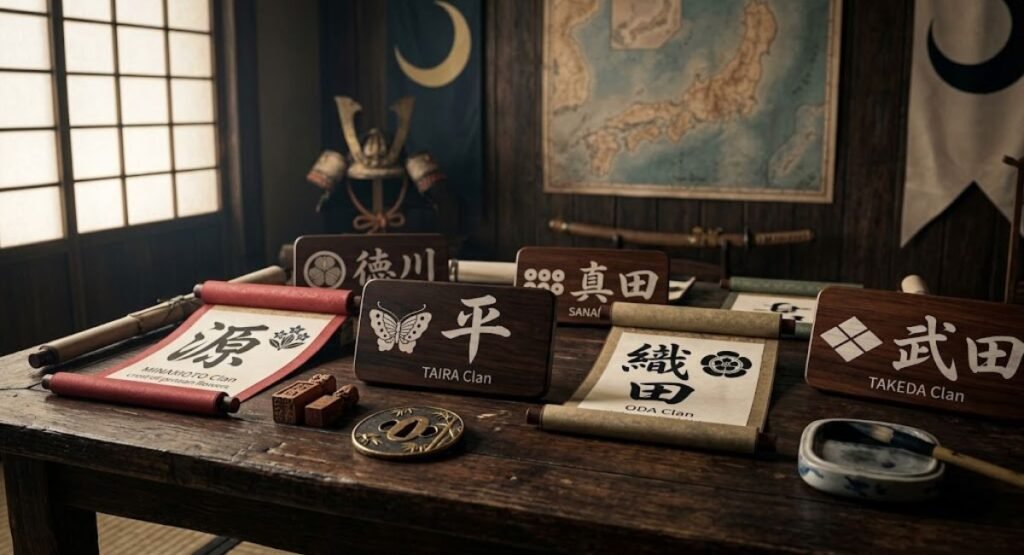
Japanese samurai names often begin with a clan name, and clan names come from the great warrior families that ruled Japan, so each one carries real history. Here are 60 real clans with the literal meaning of their kanji and where they ruled.
See also 400 Best Japanese Names That Start With S (Boys, Girls & Surnames)
- 🏯 Minamoto (mee-nah-moh-toh) 源 source; founders of the Kamakura shogunate
- 🏯 Taira (tie-rah) 平 level, peace; rivals of the Minamoto, defeated at Dan-no-ura
- 🏯 Fujiwara (foo-jee-wah-rah) 藤原 wisteria field; ancient court family that many warriors claimed descent from
- 🏯 Tachibana (tah-chee-bah-nah) 立花 standing flower; Kyūshū clan of Dōsetsu and Ginchiyo
- 🏯 Tokugawa (toh-koo-gah-wah) 徳川 virtue river; shōguns from 1603 to 1868
- 🏯 Oda (oh-dah) 織田 weave rice-field; clan of Nobunaga
- 🏯 Toyotomi (toh-yoh-toh-mee) 豊臣 abundant retainer; Hideyoshi’s family name
- 🏯 Takeda (tah-keh-dah) 武田 martial rice-field; lords of Kai
- 🏯 Uesugi (oo-eh-soo-gee) 上杉 upper cedar; lords of Echigo
- 🏯 Hōjō (hoh-joh) 北条 north branch; Kamakura regents, and a separate Late Hōjō of Odawara
- 🏯 Imagawa (ee-mah-gah-wah) 今川 now river; lords of Suruga
- 🏯 Asai (ah-sah-ee) 浅井 shallow well; lords of Ōmi
- 🏯 Asakura (ah-sah-koo-rah) 朝倉 morning storehouse; lords of Echizen
- 🏯 Mōri (moh-ree) 毛利 hair and profit; rulers of western Honshū
- 🏯 Chōsokabe (choh-soh-kah-beh) 長宗我部 rulers of Shikoku
- 🏯 Shimazu (shee-mah-zoo) 島津 island harbor; lords of Satsuma
- 🏯 Date (dah-teh) 伊達 lords of Sendai; the word also means stylish
- 🏯 Sanada (sah-nah-dah) 真田 true rice-field; clan of Yukimura
- 🏯 Maeda (mah-eh-dah) 前田 front rice-field; lords of Kaga
- 🏯 Kuroda (koo-roh-dah) 黒田 black rice-field; lords of Fukuoka
- 🏯 Hosokawa (hoh-soh-kah-wah) 細川 narrow river; lords of Kumamoto
- 🏯 Ōtomo (oh-toh-moh) 大友 great friend; lords of Bungo
- 🏯 Ryūzōji (ryoo-zoh-jee) 龍造寺 dragon-built temple; lords of Hizen
- 🏯 Nabeshima (nah-beh-shee-mah) 鍋島 pot island; lords of Saga
- 🏯 Satake (sah-tah-keh) 佐竹 assist bamboo; lords of Hitachi, later Akita
- 🏯 Nanbu (nahn-boo) 南部 south part; lords of northern Honshū
- 🏯 Mogami (moh-gah-mee) 最上 uppermost; lords of Dewa
- 🏯 Tsugaru (tsoo-gah-roo) 津軽 harbor light; lords of Hirosaki
- 🏯 Sōma (soh-mah) 相馬 mutual horse; lords of Sōma
- 🏯 Akita (ah-kee-tah) 秋田 autumn rice-field; northern clan that later ruled Miharu
- 🏯 Ashina (ah-shee-nah) 蘆名 reed name; lords of Aizu before Date
- 🏯 Naoe (nah-oh-eh) 直江 straight inlet; Uesugi retainers
- 🏯 Shibata (shee-bah-tah) 柴田 brushwood rice-field; clan of Katsuie
- 🏯 Niwa (nee-wah) 丹羽 cinnabar feather; clan of Nagahide
- 🏯 Ikeda (ee-keh-dah) 池田 pond rice-field; lords of Himeji
- 🏯 Gamō (gah-moh) 蒲生 cattail growth; lords of Aizu
- 🏯 Hachisuka (hah-chee-soo-kah) 蜂須賀 lords of Awa
- 🏯 Yamauchi (yah-mah-oo-chee) 山内 inside the mountain; lords of Tosa
- 🏯 Tōdō (toh-doh) 藤堂 wisteria hall; lords of Tsu
- 🏯 Kobayakawa (koh-bah-yah-kah-wah) 小早川 small swift river; a Mōri branch
- 🏯 Kikkawa (kee-kkah-wah) 吉川 lucky river; a Mōri branch
- 🏯 Ōuchi (oh-oo-chee) 大内 great inner; lords of Suō
- 🏯 Amago (ah-mah-goh) 尼子 nun child; lords of Izumo
- 🏯 Miyoshi (mee-yoh-shee) 三好 three goods; powerful clan of the Kinai region
- 🏯 Matsunaga (maht-soo-nah-gah) 松永 pine eternal; clan of Hisahide
- 🏯 Saitō (sye-toh) 斎藤 purify and wisteria; lords of Mino
- 🏯 Rokkaku (roh-kkah-koo) 六角 six corners; lords of Ōmi
- 🏯 Kyōgoku (kyoh-goh-koo) 京極 capital’s end; lords of Ōmi
- 🏯 Shiba (shee-bah) 斯波 this wave; Muromachi deputy family
- 🏯 Hatakeyama (hah-tah-keh-yah-mah) 畠山 field mountain; Muromachi deputy family
- 🏯 Yamana (yah-mah-nah) 山名 mountain name; powerful Muromachi clan
- 🏯 Akamatsu (ah-kah-maht-soo) 赤松 red pine; lords of Harima
- 🏯 Ashikaga (ah-shee-kah-gah) 足利 foot and profit; Muromachi shōguns
- 🏯 Nitta (nee-ttah) 新田 new rice-field; clan of Yoshisada
- 🏯 Kusunoki (koo-soo-noh-kee) 楠 camphor tree; clan of Masashige
- 🏯 Hattori (haht-toh-ree) 服部 clothing department; Iga clan of Hanzō
- 🏯 Yagyū (yah-gyoo) 柳生 willow-born; famed sword-school family
- 🏯 Ii (ee-ee) 井伊 lords of Hikone, famous for red armor
- 🏯 Honda (hohn-dah) 本多 origin and many; clan of Tadakatsu
- 🏯 Sakai (sah-kye) 酒井 sake well; clan of Tadatsugu
Famous Historical Samurai Names
These famous Japanese samurai names belong to the generals, swordsmen and loyalists whose lives shaped Japanese history. Each name is shown with its kanji and one line on why it matters.
See also 405 Best Japanese Names Meaning Winter: Boys, Girls & Frost Picks
- 🏆 Minamoto no Yoshitsune (mee-nah-moh-toh noh yoh-shee-tsoo-neh) 源義経 brilliant general of the Genpei War
- 🏆 Minamoto no Yoritomo (mee-nah-moh-toh noh yoh-ree-toh-moh) 源頼朝 first shōgun of Kamakura
- 🏆 Taira no Kiyomori (tie-rah noh kee-yoh-moh-ree) 平清盛 made the Taira clan dominant
- 🏆 Musashibō Benkei (moo-sah-shee-boh ben-kay) 武蔵坊弁慶 warrior monk loyal to Yoshitsune
- 🏆 Kusunoki Masashige (koo-soo-noh-kee mah-sah-shee-geh) 楠木正成 model of samurai loyalty
- 🏆 Hōjō Tokimune (hoh-joh toh-kee-moo-neh) 北条時宗 regent who repelled the Mongol invasions
- 🏆 Kumagai Naozane (koo-mah-guy nah-oh-zah-neh) 熊谷直実 warrior of Ichi-no-Tani who later became a monk
- 🏆 Taira no Masakado (tie-rah noh mah-sah-kah-doh) 平将門 tenth-century rebel who proclaimed himself emperor
- 🏆 Minamoto no Yoshiie (mee-nah-moh-toh noh yoh-shee-ee-eh) 源義家 famed warrior known as Hachimantarō
- 🏆 Nitta Yoshisada (nee-ttah yoh-shee-sah-dah) 新田義貞 helped topple the Kamakura shogunate in 1333
- 🏆 Ashikaga Takauji (ah-shee-kah-gah tah-kah-oo-jee) 足利尊氏 founded the Muromachi shogunate
- 🏆 Oda Nobunaga (oh-dah noh-boo-nah-gah) 織田信長 first of the three great unifiers
- 🏆 Toyotomi Hideyoshi (toh-yoh-toh-mee hee-deh-yoh-shee) 豊臣秀吉 rose from humble origins to unify Japan
- 🏆 Tokugawa Ieyasu (toh-koo-gah-wah ee-eh-yah-soo) 徳川家康 founded the Edo shogunate
- 🏆 Takeda Shingen (tah-keh-dah sheen-gen) 武田信玄 the “Tiger of Kai”
- 🏆 Uesugi Kenshin (oo-eh-soo-gee ken-sheen) 上杉謙信 the “Dragon of Echigo”
- 🏆 Date Masamune (dah-teh mah-sah-moo-neh) 伊達政宗 the “One-Eyed Dragon” of Sendai
- 🏆 Sanada Yukimura (sah-nah-dah yoo-kee-moo-rah) 真田幸村 hero of the Siege of Osaka
- 🏆 Honda Tadakatsu (hohn-dah tah-dah-kah-tsoo) 本多忠勝 reputedly never wounded in battle
- 🏆 Mōri Motonari (moh-ree moh-toh-nah-ree) 毛利元就 strategist known for the “three arrows” parable
- 🏆 Chōsokabe Motochika (choh-soh-kah-beh moh-toh-chee-kah) 長宗我部元親 warlord who united Shikoku
- 🏆 Shimazu Yoshihiro (shee-mah-zoo yoh-shee-hee-roh) 島津義弘 feared as the “Demon Shimazu”
- 🏆 Akechi Mitsuhide (ah-keh-chee mee-tsoo-hee-deh) 明智光秀 betrayed Nobunaga at Honnō-ji
- 🏆 Maeda Toshiie (mah-eh-dah toh-shee-ee-eh) 前田利家 founder of the Kaga domain
- 🏆 Ii Naomasa (ee-ee nah-oh-mah-sah) 井伊直政 commander of the red-armored Ii unit
- 🏆 Katō Kiyomasa (kah-toh kee-yoh-mah-sah) 加藤清正 famed castle builder
- 🏆 Ishida Mitsunari (ee-shee-dah mee-tsoo-nah-ree) 石田三成 led the western army at Sekigahara
- 🏆 Kuroda Kanbei (koo-roh-dah kahn-beh) 黒田官兵衛 Hideyoshi’s brilliant strategist
- 🏆 Takenaka Hanbei (tah-keh-nah-kah hahn-beh) 竹中半兵衛 celebrated tactician
- 🏆 Naoe Kanetsugu (nah-oh-eh kah-neh-tsoo-goo) 直江兼続 Uesugi’s chief retainer
- 🏆 Hattori Hanzō (haht-toh-ree hahn-zoh) 服部半蔵 samurai commander serving Ieyasu
- 🏆 Yamamoto Kansuke (yah-mah-moh-toh kahn-soo-keh) 山本勘助 strategist of the Takeda clan
- 🏆 Takeda Katsuyori (tah-keh-dah kah-tsoo-yoh-ree) 武田勝頼 Shingen’s son, defeated at Nagashino
- 🏆 Tachibana Dōsetsu (tah-chee-bah-nah doh-seh-tsoo) 立花道雪 general nicknamed the “thunder god”
- 🏆 Shibata Katsuie (shee-bah-tah kah-tsoo-ee-eh) 柴田勝家 Nobunaga’s leading general
- 🏆 Saitō Dōsan (sye-toh doh-sahn) 斎藤道三 the “Viper of Mino”
- 🏆 Imagawa Yoshimoto (ee-mah-gah-wah yoh-shee-moh-toh) 今川義元 killed at Okehazama in 1560
- 🏆 Hōjō Ujiyasu (hoh-joh oo-jee-yah-soo) 北条氏康 great lord of the Late Hōjō
- 🏆 Matsunaga Hisahide (maht-soo-nah-gah hee-sah-hee-deh) 松永久秀 notorious Sengoku schemer
- 🏆 Miyamoto Musashi (mee-yah-moh-toh moo-sah-shee) 宮本武蔵 duelist said to be undefeated, author of The Book of Five Rings
- 🏆 Sasaki Kojirō (sah-sah-kee koh-jee-roh) 佐々木小次郎 swordsman famed for his duel with Musashi
- 🏆 Yagyū Munenori (yah-gyoo moo-neh-noh-ree) 柳生宗矩 sword instructor to the Tokugawa shōguns
- 🏆 Tsukahara Bokuden (tsoo-kah-hah-rah boh-koo-den) 塚原卜伝 legendary sword master
- 🏆 Kamiizumi Nobutsuna (kah-mee-ee-zoo-mee noh-boo-tsoo-nah) 上泉信綱 founder of the Shinkage-ryū
- 🏆 Itō Ittōsai (ee-toh eet-toh-sye) 伊藤一刀斎 founder of the Ittō-ryū
- 🏆 Saigō Takamori (sye-goh tah-kah-moh-ree) 西郷隆盛 called the last true samurai
- 🏆 Sakamoto Ryōma (sah-kah-moh-toh ryoh-mah) 坂本龍馬 key figure in ending the shogunate
- 🏆 Kondō Isami (kohn-doh ee-sah-mee) 近藤勇 commander of the Shinsengumi
- 🏆 Hijikata Toshizō (hee-jee-kah-tah toh-shee-zoh) 土方歳三 Shinsengumi vice-commander
- 🏆 Okita Sōji (oh-kee-tah soh-jee) 沖田総司 gifted Shinsengumi swordsman
- 🏆 Takasugi Shinsaku (tah-kah-soo-gee sheen-sah-koo) 高杉晋作 Chōshū samurai who raised the Kiheitai militia
- 🏆 Katsu Kaishū (kah-tsoo kye-shoo) 勝海舟 statesman behind the peaceful surrender of Edo
- 🏆 Ōishi Kuranosuke (oh-ee-shee koo-rah-noh-soo-keh) 大石内蔵助 leader of the forty-seven rōnin
- 🏆 Yamamoto Tsunetomo (yah-mah-moh-toh tsoo-neh-toh-moh) 山本常朝 author of the Hagakure
- 🏆 Yoshida Shōin (yoh-shee-dah shoh-een) 吉田松陰 teacher of many Meiji leaders
Samurai Titles & Ranks
Japanese samurai names often hide a title, so knowing the ranks helps you read history and build believable characters. Below are 45 real titles, ranks and offices from the Kamakura shogunate to the Meiji era.
- 📜 Shōgun (shoh-goon) 将軍 general, military ruler
- 📜 Seii Taishōgun (say-ee tie-shoh-goon) 征夷大将軍 “Barbarian-Subduing Great General,” the full shōgun title
- 📜 Shikken (shee-kken) 執権 regent of the Kamakura shogunate
- 📜 Rensho (ren-shoh) 連署 co-signer, assistant to the regent
- 📜 Kanrei (kahn-ray) 管領 shōgun’s deputy
- 📜 Kantō Kanrei (kahn-toh kahn-ray) 関東管領 deputy for the Kantō region
- 📜 Shugo (shoo-goh) 守護 military governor
- 📜 Shugodai (shoo-goh-dye) 守護代 deputy governor
- 📜 Jitō (jee-toh) 地頭 estate steward
- 📜 Samurai-dokoro (sah-moo-rye doh-koh-roh) 侍所 samurai office
- 📜 Daimyō (die-myoh) 大名 feudal lord
- 📜 Shinpan (sheen-pahn) 親藩 domains related to the Tokugawa
- 📜 Fudai (foo-dye) 譜代 hereditary vassal lords
- 📜 Tozama (toh-zah-mah) 外様 “outside” lords
- 📜 Hanshu (hahn-shoo) 藩主 domain lord
- 📜 Jōshu (joh-shoo) 城主 castle lord
- 📜 Jōdai (joh-dye) 城代 castle warden
- 📜 Karō (kah-roh) 家老 chief retainer
- 📜 Kashin (kah-sheen) 家臣 retainer
- 📜 Hatamoto (hah-tah-moh-toh) 旗本 “under the banner,” direct shogunal vassal
- 📜 Gokenin (goh-keh-neen) 御家人 lower direct vassal of the shōgun
- 📜 Rōjū (roh-joo) 老中 senior councillor
- 📜 Tairō (tie-roh) 大老 chief minister
- 📜 Wakadoshiyori (wah-kah-doh-shee-yoh-ree) 若年寄 junior councillor
- 📜 Sobayōnin (soh-bah-yoh-neen) 側用人 chamberlain
- 📜 Bugyō (boo-gyoh) 奉行 magistrate
- 📜 Machi-bugyō (mah-chee boo-gyoh) 町奉行 city magistrate
- 📜 Jisha-bugyō (jee-shah boo-gyoh) 寺社奉行 magistrate of temples and shrines
- 📜 Kanjō-bugyō (kahn-joh boo-gyoh) 勘定奉行 finance magistrate
- 📜 Kyōto Shoshidai (kyoh-toh shoh-shee-dye) 京都所司代 shogunate deputy in Kyoto
- 📜 Ōmetsuke (oh-meh-tsoo-keh) 大目付 chief inspector
- 📜 Metsuke (meh-tsoo-keh) 目付 inspector
- 📜 Yoriki (yoh-ree-kee) 与力 police commander
- 📜 Dōshin (doh-sheen) 同心 police officer
- 📜 Kachi (kah-chee) 徒士 foot samurai
- 📜 Ashigaru (ah-shee-gah-roo) 足軽 “light foot,” infantry
- 📜 Ashigaru-gashira (ah-shee-gah-roo gah-shee-rah) 足軽頭 captain of ashigaru
- 📜 Samurai-daishō (sah-moo-rye die-shoh) 侍大将 commander of samurai
- 📜 Wakatō (wah-kah-toh) 若党 young retainer
- 📜 Chūgen (choo-gen) 中間 attendant of a samurai
- 📜 Shizoku (shee-zoh-koo) 士族 former samurai class after 1869
- 📜 Kazoku (kah-zoh-koo) 華族 Meiji-era peerage
- 📜 Tonosama (toh-noh-sah-mah) 殿様 lord, a respectful form
- 📜 Rokuhara Tandai (roh-koo-hah-rah tahn-dye) 六波羅探題 Kamakura commissioner in Kyoto
- 📜 Kōke (koh-keh) 高家 master of court protocol
Ronin Names
Rōnin were masterless samurai, and they produced some of the most famous stories and Japanese samurai names in history. The first 14 are real rōnin, ex-retainers and late-Edo swordsmen. The last 15 are rōnin vocabulary that works well for characters.
See also 280+ Best Japanese Names That Mean Dragon: Mythical & Zodiac Picks
Real rōnin, ex-retainers and late-Edo swordsmen
- 🌙 Ōishi Chikara (oh-ee-shee chee-kah-rah) 大石主税 Kuranosuke’s teenage son among the forty-seven rōnin
- 🌙 Horibe Yasubei (hoh-ree-beh yah-soo-beh) 堀部安兵衛 famed swordsman of the forty-seven
- 🌙 Horibe Yahei (hoh-ree-beh yah-heh) 堀部弥兵衛 eldest of the forty-seven, Yasubei’s father-in-law
- 🌙 Yoshida Chūzaemon (yoh-shee-dah choo-zah-eh-mohn) 吉田忠左衛門 Kuranosuke’s trusted lieutenant
- 🌙 Hara Sōemon (hah-rah soh-eh-mohn) 原惣右衛門 senior member of the forty-seven
- 🌙 Kataoka Gengoemon (kah-tah-oh-kah gen-goh-eh-mohn) 片岡源五右衛門 Asano’s close attendant
- 🌙 Ōtaka Gengo (oh-tah-kah gen-goh) 大高源吾 haiku poet among the forty-seven
- 🌙 Terasaka Kichiemon (teh-rah-sah-kah kee-chee-eh-mohn) 寺坂吉右衛門 messenger of the forty-seven
- 🌙 Yui Shōsetsu (yoo-ee shoh-seh-tsoo) 由井正雪 rōnin leader of the 1651 plot against the shogunate
- 🌙 Nakaoka Shintarō (nah-kah-oh-kah sheen-tah-roh) 中岡慎太郎 Tosa rōnin who helped forge the Satsuma-Chōshū alliance
- 🌙 Kiyokawa Hachirō (kee-yoh-kah-wah hah-chee-roh) 清河八郎 organizer of the Rōshigumi
- 🌙 Okada Izō (oh-kah-dah ee-zoh) 岡田以蔵 Tosa swordsman and assassin, called “Hitokiri Izō”
- 🌙 Kawakami Gensai (kah-wah-kah-mee gen-sye) 河上彦斎 Higo swordsman, a feared assassin of the late Edo period
- 🌙 Tanaka Shinbei (tah-nah-kah sheen-beh) 田中新兵衛 Satsuma swordsman linked to the 1863 Anenokōji assassination
Rōnin vocabulary
15. 🌙 Rōnin (roh-neen) 浪人 “wave person,” a masterless samurai
16. 🌙 Rōshi (roh-shee) 浪士 masterless warrior
17. 🌙 Tengai (ten-guy) 天蓋 basket hat worn by komusō
18. 🌙 Komusō (koh-moo-soh) 虚無僧 mendicant Zen monk, sometimes a rōnin in disguise
19. 🌙 Dappan (dah-ppahn) 脱藩 leaving one’s domain without permission
20. 🌙 Shishi (shee-shee) 志士 patriot of the late Edo period
21. 🌙 Hitokiri (hee-toh-kee-ree) 人斬り assassin of the Bakumatsu era
22. 🌙 Rōshigumi (roh-shee-goo-mee) 浪士組 rōnin corps formed in 1863
23. 🌙 Shinsengumi (sheen-sen-goo-mee) 新選組 “newly selected corps”
24. 🌙 Miburō (mee-boo-roh) 壬生狼 “wolves of Mibu”
25. 🌙 Kenkaku (ken-kah-koo) 剣客 swordsman
26. 🌙 Musha-shugyō (moo-shah shoo-gyoh) 武者修行 warrior’s pilgrimage of training
27. 🌙 Nagaremono (nah-gah-reh-moh-noh) 流れ者 drifter
28. 🌙 Rurō (roo-roh) 流浪 roaming
29. 🌙 Kozure Ōkami (koh-zoo-reh oh-kah-mee) 子連れ狼 “Lone Wolf and Cub”
Rare Samurai Inspired Names
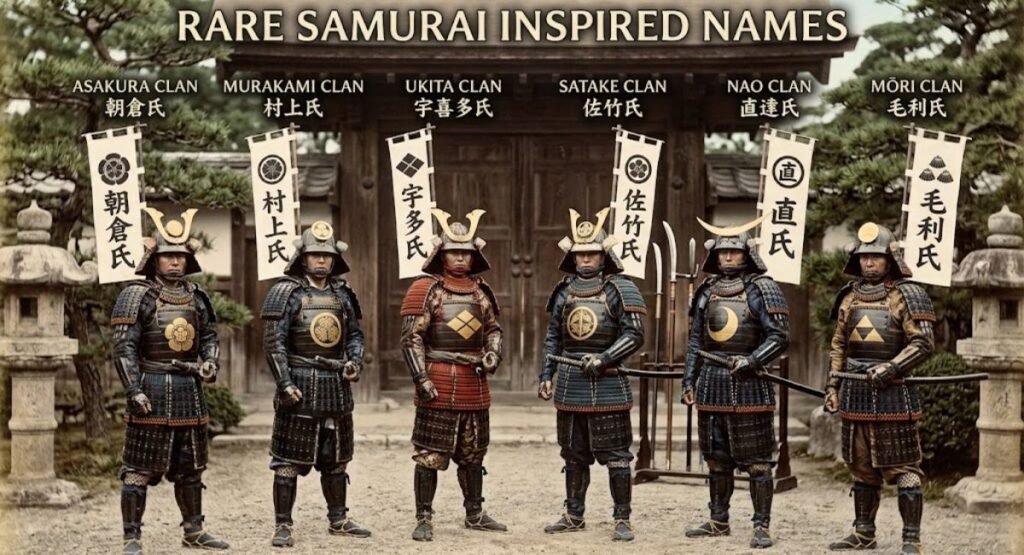
Rare Japanese samurai names can come from banners, armor, philosophy and battlefields, all of which are real words with real history. These 43 are best for pen names, characters and creative projects.
See also 400+ Best Japanese Names Meaning Assassin (Boys, Girls & Surnames)
Banners, crests and gear
- 🎌 Fūrinkazan (foo-reen-kahn-zahn) 風林火山 “wind, forest, fire, mountain,” Shingen’s battle banner
- 🎌 Kikusui (kee-koo-soo-ee) 菊水 “floating chrysanthemum,” Masashige’s crest
- 🎌 Mitsu-tomoe (mee-tsoo toh-moh-eh) 三つ巴 three-comma swirl, a common samurai crest
- 🎌 Ichimonji (ee-chee-mohn-jee) 一文字 “one-line character,” a famed sword school
- 🎌 Kamon (kah-mohn) 家紋 family crest
- 🎌 Maedate (mah-eh-dah-teh) 前立 crest on the front of a helmet
- 🎌 Gunbai (goon-bye) 軍配 commander’s war fan
- 🎌 Jingasa (jeen-gah-sah) 陣笠 war hat
- 🎌 Sashimono (sah-shee-moh-noh) 指物 banner worn on a warrior’s back
- 🎌 Nobori (noh-boh-ree) 幟 tall standard flag
- 🎌 Jinbaori (jeen-bah-oh-ree) 陣羽織 surcoat worn over armor
- 🎌 Menpō (mehn-poh) 面頬 face guard
- 🎌 Sode (soh-deh) 袖 armor shoulder guard, literally “sleeve”
- 🎌 Kote (koh-teh) 籠手 armored sleeve
- 🎌 Suneate (soo-neh-ah-teh) 脛当 shin guard
- 🎌 Habaki (hah-bah-kee) 鎺 blade collar of a sword
- 🎌 Menuki (meh-noo-kee) 目貫 decorative grip ornament
- 🎌 Kojiri (koh-jee-ree) 鐺 end cap of a scabbard
Philosophy and spirit
19. 🎌 Jisei (jee-say) 辞世 death poem
20. 🎌 Ichigo ichie (ee-chee-goh ee-chee-eh) 一期一会 “one time, one meeting”; treasure every encounter
21. 🎌 Fudōshin (foo-doh-sheen) 不動心 immovable mind
22. 🎌 Zanshin (zahn-sheen) 残心 lingering alertness
23. 🎌 Mushin (moo-sheen) 無心 empty, calm mind
24. 🎌 Shoshin (shoh-sheen) 初心 beginner’s mind
25. 🎌 Heijōshin (hay-joh-sheen) 平常心 composure
26. 🎌 Shin-gi-tai (sheen-gee-tie) 心技体 mind, technique, body
27. 🎌 Kokoro (koh-koh-roh) 心 heart and mind
28. 🎌 Hara (hah-rah) 腹 belly, the seat of courage
29. 🎌 Ki (kee) 気 spirit, vital energy
30. 🎌 Maai (mah-eye) 間合い combat distance
Battles and castles
31. 🎌 Sekigahara (seh-kee-gah-hah-rah) 関ヶ原 1600 battle that decided Tokugawa rule
32. 🎌 Kawanakajima (kah-wah-nah-kah-jee-mah) 川中島 battleground of Shingen and Kenshin
33. 🎌 Nagashino (nah-gah-shee-noh) 長篠 1575 battle famed for musket volleys
34. 🎌 Okehazama (oh-keh-hah-zah-mah) 桶狭間 Nobunaga’s 1560 victory over Imagawa
35. 🎌 Dan-no-ura (dahn noh oo-rah) 壇ノ浦 1185 sea battle that ended the Taira
36. 🎌 Yashima (yah-shee-mah) 屋島 Genpei War battle site
37. 🎌 Ichi-no-Tani (ee-chee noh tah-nee) 一ノ谷 Genpei War battle where Atsumori fell
38. 🎌 Shiroyama (shee-roh-yah-mah) 城山 site of Saigō Takamori’s last stand in 1877
39. 🎌 Honnō-ji (hohn-noh-jee) 本能寺 temple where Nobunaga died in 1582
40. 🎌 Azuchi (ah-zoo-chee) 安土 Nobunaga’s castle town
41. 🎌 Himeji (hee-meh-jee) 姫路 white-walled castle famed worldwide
42. 🎌 Hikone (hee-koh-neh) 彦根 castle town of the Ii clan
43. 🎌 Odawara (oh-dah-wah-rah) 小田原 stronghold of the Late Hōjō
Samurai Names In Anime & Games
Japanese samurai names in anime, film and games are often inspired by real history, so they feel familiar even when the characters are fictional. These 45 are shown with kanji and the work they come from.
See also 300+ Best Japanese Names That Mean Lightning (Boys, Girls & Surnames)
Classic films and fiction
- 🎮 Kambei Shimada (kahm-beh shee-mah-dah) 島田勘兵衛 leader of Seven Samurai
- 🎮 Katsushirō Okamoto (kah-tsoo-shee-roh oh-kah-moh-toh) 岡本勝四郎 young samurai of Seven Samurai
- 🎮 Gorōbei Katayama (goh-roh-beh kah-tah-yah-mah) 片山五郎兵衛 swordsman of Seven Samurai
- 🎮 Shichirōji (shee-chee-roh-jee) 七郎次 Kambei’s old comrade in Seven Samurai
- 🎮 Heihachi Hayashida (hay-hah-chee hah-yah-shee-dah) 林田平八 cheerful woodcutter-swordsman of Seven Samurai
- 🎮 Kyūzō (kyoo-zoh) 久蔵 silent master swordsman of Seven Samurai
- 🎮 Kikuchiyo (kee-koo-chee-yoh) 菊千代 wild self-styled samurai of Seven Samurai
- 🎮 Kuwabatake Sanjūrō (koo-wah-bah-tah-keh sahn-joo-roh) 桑畑三十郎 wandering rōnin of Yojimbo
- 🎮 Tsubaki Sanjūrō (tsoo-bah-kee sahn-joo-roh) 椿三十郎 rōnin hero of Sanjūrō
- 🎮 Washizu Taketoki (wah-shee-zoo tah-keh-toh-kee) 鷲津武時 ambitious general of Throne of Blood
- 🎮 Zatōichi (zah-toh-ee-chee) 座頭市 blind swordsman of a classic film series
- 🎮 Ogami Ittō (oh-gah-mee eet-toh) 拝一刀 hero of Lone Wolf and Cub
- 🎮 Tange Sazen (tahn-geh sah-zen) 丹下左膳 one-eyed, one-armed swordsman of Japanese fiction
Anime and manga
14. 🎮 Himura Kenshin (hee-moo-rah ken-sheen) 緋村剣心 wandering swordsman of Rurouni Kenshin
15. 🎮 Sagara Sanosuke (sah-gah-rah sah-noh-soo-keh) 相楽左之助 fighter of Rurouni Kenshin
16. 🎮 Shinomori Aoshi (shee-noh-moh-ree ah-oh-shee) 四乃森蒼紫 rival of Kenshin
17. 🎮 Seta Sōjirō (seh-tah soh-jee-roh) 瀬田宗次郎 swift swordsman of Rurouni Kenshin
18. 🎮 Hiko Seijūrō (hee-koh say-joo-roh) 比古清十郎 Kenshin’s master
19. 🎮 Saitō Hajime (sye-toh hah-jee-meh) 斎藤一 wolf of Mibu in Rurouni Kenshin
20. 🎮 Shishio Makoto (shee-shee-oh mah-koh-toh) 志々雄真実 villain of Rurouni Kenshin
21. 🎮 Kuchiki Byakuya (koo-chee-kee byah-koo-yah) 朽木白哉 noble captain of Bleach
22. 🎮 Zaraki Kenpachi (zah-rah-kee ken-pah-chee) 更木剣八 battle-loving captain of Bleach
23. 🎮 Kyōraku Shunsui (kyoh-rah-koo shoon-soo-ee) 京楽春水 easygoing captain of Bleach
24. 🎮 Tomioka Giyū (toh-mee-oh-kah gee-yoo) 冨岡義勇 Water Hashira of Demon Slayer
25. 🎮 Rengoku Kyōjurō (ren-goh-koo kyoh-joo-roh) 煉獄杏寿郎 Flame Hashira of Demon Slayer
26. 🎮 Kamado Tanjirō (kah-mah-doh tahn-jee-roh) 竈門炭治郎 hero of Demon Slayer
27. 🎮 Tsugikuni Yoriichi (tsoo-gee-koo-nee yoh-ree-ee-chee) 継国縁壱 legendary swordsman of Demon Slayer
28. 🎮 Sakata Gintoki (sah-kah-tah geen-toh-kee) 坂田銀時 samurai of Gintama
29. 🎮 Katsura Kotarō (kah-tsoo-rah koh-tah-roh) 桂小太郎 rebel of Gintama, named after a real Katsura
30. 🎮 Hijikata Toshirō (hee-jee-kah-tah toh-shee-roh) 土方十四郎 police vice-commander of Gintama
31. 🎮 Kondō Isao (kohn-doh ee-sah-oh) 近藤勲 police chief of Gintama
32. 🎮 Mugen (moo-gen) ムゲン wild swordsman of Samurai Champloo
33. 🎮 Hyakkimaru (hyah-kkee-mah-roo) 百鬼丸 hero of Dororo
Video games and television
34. 🎮 Sakai Jin (sah-kye jeen) 境井仁 hero of Ghost of Tsushima
35. 🎮 Shimura (shee-moo-rah) 志村 lord of Tsushima in Ghost of Tsushima
36. 🎮 Ashina Genichirō (ah-shee-nah gen-ee-chee-roh) 葦名弦一郎 warrior of Sekiro
37. 🎮 Ashina Isshin (ah-shee-nah ee-sheen) 葦名一心 Sword Saint of Sekiro
38. 🎮 Akechi Samanosuke (ah-keh-chee sah-mah-noh-soo-keh) 明智左馬介 hero of Onimusha
39. 🎮 Yoshimitsu (yoh-shee-mee-tsoo) 吉光 sword-wielding fighter of Tekken
40. 🎮 Haohmaru (hah-oh-mah-roo) 覇王丸 wandering swordsman of Samurai Shodown
41. 🎮 Tachibana Ukyō (tah-chee-bah-nah oo-kyoh) 橘右京 frail swordsman of Samurai Shodown
42. 🎮 Kibagami Genjūrō (kee-bah-gah-mee gen-joo-roh) 牙神幻十郎 rival swordsman of Samurai Shodown
43. 🎮 Yoshii Toranaga (yoh-shee-ee toh-rah-nah-gah) 吉井虎長 lord of the Shōgun story, inspired by Ieyasu
44. 🎮 Toda Mariko (toh-dah mah-ree-koh) 戸田鞠子 translator-heroine of Shōgun
45. 🎮 Kashigi Yabushige (kah-shee-gee yah-boo-shee-geh) 樫木藪重 cunning lord of Shōgun
How To Choose A Samurai Name
First decide whether you need a real historical name, a classic nanori or a fictional one. Then check the kanji, say it aloud and match it to your clan or character.
- ✅ Real person: use a full name from the Famous Historical section, in family-name-first order.
- ✅ Original character: pair a clan from the Clan section with a nanori from the Male or Female section.
- ✅ Warrior woman: use a name like Naotora or Takeko, or add -gozen or -hime for a noble ring.
- ✅ Rank and role: add a title like Karō or Hatamoto in your story to show status.
- ✅ Wandering swordsman: try a rōnin name or a word like Rurō or Nagaremono.
- ✅ Kanji check: confirm the characters yourself, since one sound can have many meanings.
Frequently Asked Questions
What makes Japanese samurai names different from ordinary names?
Japanese samurai names combine a clan name with a nanori, and many warriors also had a childhood name and a pen name.
What is a nanori?
A nanori is the adult given name a samurai took when he came of age, like Nobunaga or Ieyasu. It is the core of most Japanese samurai names.
Did women have Japanese samurai names?
Some, like Nakano Takeko, are recorded by their given names. Many noblewomen are known by titles such as -gozen, -hime or -dono, because their personal names were seldom written down.
What do -maru and -rō mean in Japanese samurai names?
Maru is a classic boy’s ending, and -rō with a number shows birth order, like Jirō for second son.
Can I use Japanese samurai names for a baby?
Classic nanori like Masanori and Nobuyuki are real names, but in Japan the kanji must come from the official approved lists.
Final Thoughts
Samurai names are small windows into the values and history of Japan’s warrior class. A clan name shows where a warrior belonged, and a nanori shows who his family hoped he would become. You now have over 400 names with kanji, meaning and pronunciation, from shōguns and onna-bugeisha to rōnin and anime heroes. Use the real historical sections when you want authenticity, and the rare and anime sections when you are building a character or world. Always say the name aloud and check the kanji before you commit. Whichever you choose, may it carry the honor and spirit of the warriors behind it.

Founder of TheNameVibe.com where every name tells a story. Passionate about names, their meanings, and the vibes they carry.
1 thought on “400+ Best Japanese Samurai Names: Real Historical, Male, Female & Clan Picks”